Context
With OpenAI confirming the launch of ChatGPT Ads in January 2026, Sam, Senior Paid Media Executive at Arke, shares how we’re currently thinking about this new addition to the paid media playbook, the potential impact it could have, and the key considerations for advertisers of all sizes.
What are OpenAI (ChatGPT) Ads?
As AI adoption has accelerated, large language models like ChatGPT have quickly become a default tool for how people access information: from simple queries through to complex problem-solving and decision-making.
With a rapidly growing user base and an increasing role in everyday behaviour, it was always likely that platforms like ChatGPT would eventually introduce advertising as a revenue stream. From a marketing perspective, this represents a largely untapped environment, where attention is high and intent is often explicit.
Early reports suggest OpenAI is pricing ChatGPT Ads at around $60 per 1,000 impressions, roughly three times higher than typical Meta awareness placements. In return, advertisers should expect high-level reporting only, such as impressions and clicks, with limited visibility into downstream actions like conversions or revenue.
What makes this format different is context. Ads appear within active conversations, where users are already asking questions, comparing options, or seeking guidance. Unlike search or social media, this is not interruption-based media. It’s context-driven exposure, with clear labelling and user controls.
If this placement scales, it has the potential to become a new channel for discovery and performance, particularly for brands focused on intent, education, and consideration-stage activity.
To put the opportunity into perspective, ChatGPT is widely recognised as the fastest-growing platform ever, reaching over 100 million users within two months of launch. TikTok took nine months to reach the same milestone, while Instagram took more than two years.
What ChatGPT Ads could become
The long-term opportunity sits in the depth of data available within LLMs. Over time, this should unlock far more advanced ways of reaching high-intent audiences, driven by a deeper understanding of language, semantics, and user intent than most advertising platforms currently offer.
We could see meaningful improvements in how intent is modelled: from more sophisticated keyword and query interpretation, to deeper language dissection, and a stronger shift towards text-to-image or multimodal ad formats. We’ve already seen early foundations of this through tools like Google’s Asset Studio and the rise of AI-led creative generation. ChatGPT, however, has the potential to take this further given the richness of conversational data available to it.
Looking further ahead, ad formats are likely to expand well beyond what we recognise today. That could include more interactive experiences, immersive formats, or entirely new executions, and ideally, ones that are accessible to smaller advertisers, not just enterprise brands. As competition increases, particularly with Google, we expect ChatGPT’s ad offering to evolve in breadth, potentially mirroring the full-funnel flexibility seen in products like Performance Max, supported by OpenAI’s partnership with Microsoft.
If OpenAI wants to compete seriously with established platforms, full-funnel capability will be essential. Attribution will need to mature from awareness through to conversion modelling. It’s difficult to imagine a future where that doesn’t become table stakes.
Ultimately, the real value won’t sit in placements alone, but in the insight derived from the data.
Are ChatGPT Ads for everyone?
Pricing is the biggest immediate concern. Launching at high CPMs creates natural pressure, and over time, that often leads to bidding wars. Historically, that’s where smaller budgets begin to struggle.
There’s also a risk that “premium” becomes the dominant positioning — premium inventory, premium access, premium outcomes — gradually pushing more functionality behind paywalls and reducing accessibility across the platform.
If OpenAI effectively owns the advertising environment within ChatGPT, there’s a legitimate question around how pricing evolves in the absence of direct, like-for-like competition within the platform itself, particularly without an equivalent offering from competitors such as Gemini.
Across our client portfolio, we typically see Meta awareness CPMs averaging £5–£7, while Google’s AI-led products, such as Demand Gen and Performance Max, range from approximately £5 to £50 depending on industry. This highlights the growing cost dependency across AI-driven advertising platforms, where scale and budget increasingly influence competitiveness within higher-priced auction environments.
That said, as more users shift from traditional search behaviour towards AI-assisted answers, stronger algorithms, richer audience data, and new ad surfaces could begin to justify a role within the wider media mix. How that balance plays out will take time.
What we’ll be watching closely
At Arke, our focus will be on where this channel genuinely delivers value for clients. Any opportunity to expand inventory or coverage will be judged on performance and data, not novelty.
As with other platforms, testing will be critical. The brands that learn early, iterate quickly, and understand how this format actually behaves will be best positioned as LLM advertising matures.
For now, we see ChatGPT Ads as a potentially disruptive addition for larger, awareness-led clients. The initial role is less about direct response and more about complementing channels like OOH and programmatic to drive reach and coverage in a premium environment.
The longer-term opportunity sits in audience learning. As data collection becomes more refined through improved signalling and stronger algorithms, ChatGPT could become an effective testing ground for cold prospecting. That, in turn, enables deeper audience insight and more effective retargeting, particularly where first-party data is limited or unavailable.
If that audience value can be realised, it provides stronger justification for the higher CPMs. Until then, ChatGPT Ads shouldn’t be treated as a default inclusion, but rather as a higher-tier option for brands looking to invest in visibility, experimentation, and emerging AI-led environments.
Are Chat GPT Ads a solution for you?
Let’s have a chat and discuss your requirements, our expert Arkenauts know what’s better for each industry as our work expands across multiple sectors. Say hi on the contact form below and let’s devise your next award-winning campaign!
TL;DR
- Don’t chase acronyms in 2026; treat them as signals of how search is expanding, not replacements for SEO.
- Search is becoming answer-led and platform-led, so organic success starts before Google in the feeds, forums, and communities where opinions form.
- Spend more time than you think understanding your audience, because keyword research alone won’t tell you how they decide or where they hang out.
- Keep the fundamentals tight: strong technical foundations, clear structure, and content aligned to high intent rather than AI-generated filler.
- Build a consistent, trusted brand across the web for humans and machines, because AI systems reward clear, coherent signals and reputation patterns.
In this article, Sam, SEO Specialist at Arke, shares how we’re thinking about organic search – and where focus should sit in 2026.
It’s no secret that search marketing is in a moment of extreme flux. That’s not to say that search hasn’t always been changing, adapting to new technologies and user behaviour, but in the last year we’ve been introduced to new acronyms, ambiguous platform updates, and changes to the way people search. And this is because of AI.
There’s a lot of noise around what the future of search looks like, and it’s important for us as forward-thinking marketers to try to imagine those possibilities. Will agentic AI take over the role of search altogether, will discovery continue to fragment across platforms like TikTok and Reddit, or will we end up with a hybrid model where traditional search, AI interfaces, and social platforms coexist?
Interesting thought experiments, yes – but not grounded in the here and now, and not particularly useful for businesses trying to make sales or to us as an agency focused on delivering value to clients. It’s important to distinguish hype from reality to know where to invest your SEO budget in 2026.
What’s with all these acronyms? (AEO, AIO, GEO, SXO)
Some search marketers have created new acronyms to provide a framework for successful organic search strategies in the future. This isn’t about the lazy “SEO is dead” tropes I’ve seen some of the less sentimental voices on LinkedIn decrying. The intention is to broaden the scope of organic search marketing beyond Search Engine Optimisation – or at least beyond the narrower interpretation of SEO shaped by years of relative stasis in how the discipline was practised.
So what do these new terms mean, and what do they aim to achieve?
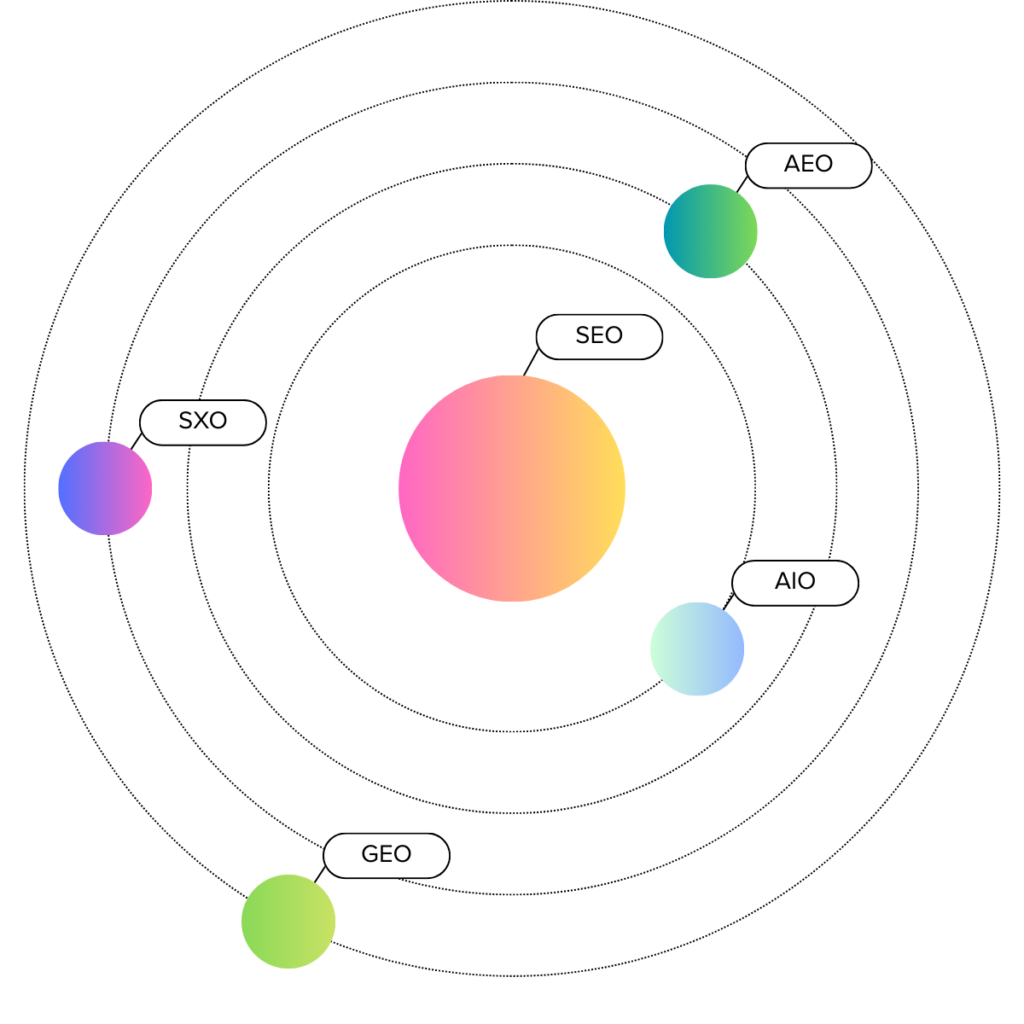
AEO ( Answer Engine Optimisation): Optimising for zero-click answers, such as AI Overviews
AIO (Artificial Intelligence Optimisation): Ensuring your brand is represented accurately in AI training sources
GEO (Generative Engine Optimisation): Optimising content to be cited or summarised by AI chats
SXO (Search Experience Optimisation): Prioritises user engagement a responsive and unified experience
SEO remains the gravitational centre of organic search. New acronyms like AEO, GEO, SXO, and AIO orbit it, highlighting how optimisation plays out across different surfaces and systems rather than replacing the core discipline.
How search has changed
- SERP/UI shifts: AI Overviews, AI Mode experimentation, and more answer-first layouts.
- Rise of LLM-based search tools: Perplexity, ChatGPT Search, and similar interfaces.
- User behaviour: growing zero-click behaviour, platform-first discovery, and TikTok increasingly used as a search engine.
- AI capabilities: improved summarisation, early memory and personalisation, and emerging agentic behaviour.
- Social search: a rapidly growing behaviour reshaping discovery, with algorithms prioritising engagement, perceived authority, watch time, and community interaction over keywords.
The mechanics of how search results are presented have changed, but the underlying logic hasn’t. Entities, relevance, and structure still depend on clean, well-understood inputs… they’re just being interpreted across more surfaces than before.
What has stayed the same
- Intent still matters: understanding what users are actually trying to achieve, whether the result is a link, a summary, or an AI-generated answer.
- Clean site structures enable easy browsing: logical architecture helps both humans and machines.
- Internal linking provides context: reinforce topical relationships and help guide both users and systems toward your most important pages.
- Trust, authority, and reputation: these influence traditional rankings and increasingly shape how AI models assess credibility, relevance, and whether a brand is worth citing at all.
- Quality over quantity: unique and information-dense content continues to outperform fluff.
The fundamentals of good SEO are still the fundamentals, however search looks.
What should I focus on in 2026?
Take more time than you think to research your audience
If there is one area that deserves more attention than most marketers instinctively give it, it’s developing a deeper understanding of your audience. In 2026, that understanding will matter more than any individual tactic or channel. Keyword research remains useful, but on its own it only tells you what people search for, not who they are, how they think, or how they arrive at decisions long before a query is typed.
In practice, the gap between marketers and their audiences is often smaller than assumed. When you genuinely care about the product or service you are marketing, many of the same interests, frustrations, and behaviours are shared. The places you spend time online are frequently the same places where your audience forms opinions, asks questions, and validates choices. Treating that overlap as a strength makes audience research more intuitive and more effective.
The work itself should start with listening rather than optimisation. GA4 demographic data can provide a baseline, but it quickly reaches its limits. More valuable insight comes from observing how people talk about your brand or your industry in forums, on social platforms, in reviews, and within industry communities. Surveys can add structure to those insights, while ongoing sentiment tracking helps reveal how perception changes over time. This is also where Rand Fishkin’s critique of measurement is useful: he argues that dashboards often over-credit the final touchpoint, so the honest approach is to look at patterns over time and test what actually moves demand.
SEO starts before your website, so influence each touchpoint
With that understanding in place, influence can begin well before a search happens. Discovery increasingly takes place across social platforms and community-driven spaces, where repeated exposure and credibility shape opinion over time. This aligns closely with Fishkin’s broader point that platform-first marketing has changed what success looks like, shifting the goal from pure website traffic to influence where audiences already spend their attention.
It’s also where Mike King’s “it’s just SEO” critique becomes practical. If you treat organic as something that begins and ends on Google rankings, you’re optimising for a shrinking slice of the journey. King’s argument is that even when tactics overlap, the value exchange and the surfaces are changing, and your strategy needs to expand accordingly.
Your UX needs to be good and technical foundations solid
When people do reach the point of searching for you directly, that demand needs to be supported by a site that has solid technical foundations and a UX that doesn’t turn people away. Clean architecture, strong internal linking, structured data, and clear entity signals ensure that both users and machines can understand who you are and what you offer.
Content should be aligned with intent and agree with other sources
At the same time, on-site content should reflect higher intent than in the past. By the time people land on your site, they’re less likely to be casually researching and more likely to be converting.
That doesn’t mean there’s no place for brand or cultural content. Your “about us” pages, your story, and how you talk about who you are still matter, particularly when they reinforce what people are already hearing about your brand elsewhere. The difference is that this content now plays a supporting role, helping validate and align perception rather than doing all the heavy lifting on its own.
This is also why “AI slop” is such a bad trade. Lily Ray has been direct about the rise of low-quality, spammy content and the long-term risk of chasing short-term visibility, especially as systems get better at rewarding trust and quality over time.
We have a new audience: AI
Finally, the audience now includes machines as well as people, so treat AI as a new persona. AI systems read, summarise, and learn from the information available about you, looking for consistent patterns across the web. Structured data, well-organised content, and a coherent off-page presence make it easier for those systems to interpret your brand accurately, in much the same way they help human audiences build trust.
2026 Organic Search checklist
Technical SEO
- Clean, crawlable architecture
- Strong internal linking
- Rich structured data
- Entity clarity across web presence
- Performance, accessibility, UX
Content and on-page
- High-value, information-dense, scannable content
- A unique brand voice clarity about user intent
- Avoid low-quality AI slop
Off-Page and entity building
- Brand mentions as non-link authority signalsStrong reputation across web platforms
- Reviews, citations, listicles
- Presence in discussions (Reddit, LinkedIn, industry media, directories)
- Cross-Surface Presence
- Think beyond Google: be discoverable where users search (TikTok, YouTube, Reddit, AI chat interfaces)
Want to talk SEO with the Arkenauts?
Let’s have a chat and discuss your requirements for a refreshed SEO strategy with an award-winning marketing agency.
With the clock ticking until Black Friday, the Arkenauts have put together a checklist for the main things you need to consider and can still action on time for a successful marketing strategy during BFCM.
Whilst we at Arke can support your overall strategy, we recognise that pricing, inventory planning, web development, and logistics optimisations may not be too flexible by now, but your BFCM marketing campaign can still be a success by following our tips.
10 steps to succeed this Black Friday.
1. Define how long you will take part for
What started several years ago as a one-day shopping frenzy has been diluted by multiple approaches, with retailers offering their Black Friday discounts for several days or even weeks. Analyse what impact this will take on your brand, bottomline, and your customers’ perception if you participate in Black Friday over an extended period.
2. What will you offer?
BFCM can be a great opportunity to reduce inventory levels and clear collections. Site-wide discounts can be communicated more easily to customers, but going granular can also increase your customers’ perception of hitting the jackpot if you’re able to offer irresistible discounts.
3. Have a look at your results from last year
Don’t forget to check the performance of your online store last year. Were there any pain points that need to be communicated (such as an extended period for deliveries?). Were there any collections that didn’t perform as expected or others that surpassed your objectives and that may offer a chance to increase your margins?
4. Set up your BFCM page
If you haven’t got a BFCM landing page from previous years, it’s never too late to create one where your promotions are shown with exclusive content for the duration of the campaign. This page will also be a great testing ground to where you can direct your paid campaigns.

5. Design your multi-channel communications strategy
Losing sales by communicating too late or receiving complaints from customers who purchased before the campaign goes live is a common scenario. Clearly communicate your returns policies during BFCM and any price-matching strategies you’re able to put in place. Decide well in advance when you will start communicating your Black Friday marketing campaign.
6. Target your paid campaigns accurately
Use advanced segmentation based on your customers’ profiles and retargeting for those who visited your site before your BFCM campaign goes live.
With competition and demand increasing considerably during the run-up to BFCM, it’s always crucial to direct your budget to those most likely to convert, whilst also trying to reach new audiences.
Consider launching data-capture competitions and give-aways four weeks before Black Friday to build up your email list and retargeting campaigns.
At Arke we can help you devise a correct bidding strategy to win the day, optimising towards target ROAS and maximising value to boost your marketing ROI.
7. Can you offer a sustainable spin to your customers?
The consumerism spirit of the discounting campaign could pose a contradiction to your brand values. In response to this, creative initiatives have gained prominence over the years so you can have a sustainable Black Friday campaign. At Arke we don’t take a one-size-fits-all approach and specialise in tailoring creative strategies for each of our clients. Interested? Just hit that contact button and tell us about your unique needs.
8. Prepare your teams
The most successful marketing campaigns cannot be detrimental to your customers’ experience. Consider any additional support your teams will need for increased demand over BFCM and the run-up to the holidays, so your customers get your products on time and their questions answered swiftly.
9. Plan for loyalty and retention
BFCM is not just about discounts. Take it as an opportunity to scale LTV, showcasing your values and the quality of your products.
Make sure your reviews are clearly shown not just on your website but also across your multi-channel communications, and have a plan in place to reward loyal customers who act as referrals and ambassadors of your brand.
10. Check your tracking!
Having inaccurate data is one of the biggest issues retailers face to understand the performance of their marketing campaigns. Server-side tracking combined with Consent Mode V2 are required to stay privacy-compliant and enhance accuracy.
Download Arke’s Black Friday Marketing Checklist
Let’s talk about your eCommerce strategy
Our expertise across multiple industries is constantly recognised as refreshing by our clients as we bring fresh perspectives and learnings gained over the years.
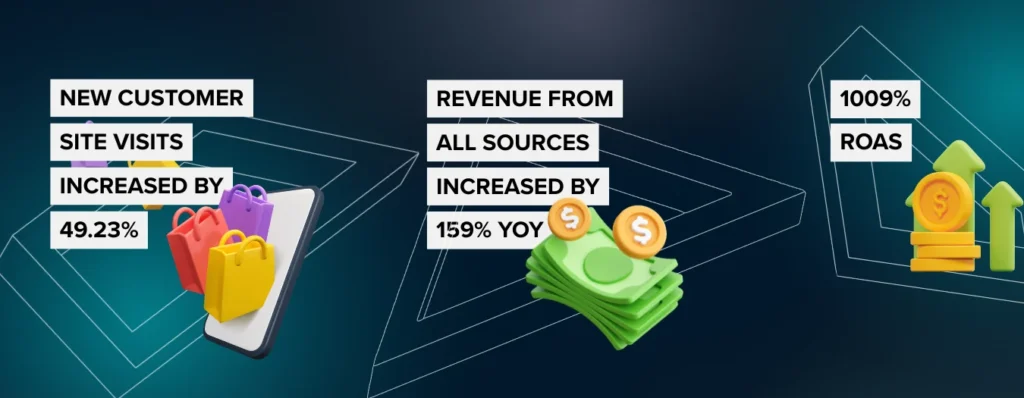
Our Black Friday campaign for Shay & Blue won the Best Paid Social Campaign at the UK Paid Media Awards, bringing record ROAS, revenue and engagement among younger audiences. These are some of the stats we achieved with them:
Let’s have a chat and tell us about your unique needs or book an intro call directly.
Bluesky is shaking things up in the social media and organic marketing world. Originally a side project at Twitter (now X) and backed by Jack Dorsey, it was built as a proof of concept for the Authenticated Transfer (AT) Protocol as a way to decentralise social media and break away from corporate control. It’s been around since 2019 but was invite-only until early 2024 and has since amassed nearly 32 million users!
Fast forward to today, and with more users leaving X (especially after the 2024 US election), Bluesky is becoming a trending alternative. But what does that mean for marketing? Unlike traditional social platforms that thrive on algorithm-driven content and monetise via ad placements, Bluesky puts control in the hands of users.
So, how can brands make the most of Bluesky? Let’s dive into how businesses can build communities, create engaging content, and thrive in a decentralised space.
So, What Makes Bluesky Different?
Most social media platforms such as Facebook, Instagram, and X (formerly Twitter), are built around algorithms that push content based on engagement, paid promotions, and trends. Bluesky changes this. Instead of a central algorithm deciding what shows up on your feed, Bluesky lets users curate their own experience. This means:
-
- No single algorithm controlling content visibility
-
- Personalised feeds based on user preferences
-
- Emphasis on community and authentic engagement
For marketers, this means success on Bluesky is all about organic reach, meaningful interactions, and quality content, tailored to what users on Bluesky are looking for. As Bluesky have openly discussed their reluctance to introduce paid advertising on the site, this provides and opportunity for brands to rethink their strategies and focus on building real connections with their audience.
How to Build a Community on Bluesky
With no algorithmic shortcuts, engagement is king. Here’s how brands can grow an audience on Bluesky and make an impact with their organic marketing strategy:
Content, Content, Content
Since there’s no algorithm pushing your posts, you need to make your content easy to discover.
-
- Use relevant keywords – Bluesky doesn’t have traditional search-based algorithms, so using the right words helps people find your content.
-
- Hashtags also matter – Bluesky allows users to filter content through hashtags, making them essential for visibility. Have a look at relevant feeds too, as some will automatically share posts that utilise their community hashtag!
Prioritise Engagement
There’s no “boost” button, so the best way to grow is by making sure you’re talking with and connecting with your audience.
-
- Reply to comments and mentions to keep conversations going.
-
- Ask questions and encourage discussions in your posts.
-
- Engage with others—the more active you are, the more people will engage back.
Collaborate & Cross-Promote
Traditional cross-platform promotion might not be as effective, but partnering with trusted community voices can work wonders.
-
- Team up with influencers or thought leaders already active on Bluesky.
-
- Join group discussions and engage in community-driven threads.
-
- Feature user-generated content (UGC) to encourage participation.
Self-Verify for Trust
Bluesky lets users verify their identity by linking their profile to a custom domain (e.g., @yourbrand.com). This helps brands build trust and credibility in the community, so ensure you’re taking advantage of this simple step!
Content Strategies That Work
With no paid ads or algorithm hacks, your content needs to be crafted to stand out on its own. Here are a few content ideas designed for Bluesky’s unique ecosystem:
-
- Thought Leadership – Share industry insights, bold opinions, and expert takes to position yourself as a go-to voice.
-
- Behind-the-Scenes (BTS) Content – Show the people and culture behind your brand to build a personal connection.
-
- Community Polls & Q&As – Let your audience weigh in on decisions, product ideas, or just fun topics.
-
- User-Generated Content (UGC) – Feature customer testimonials, fan content, or community contributions.
How to Measure Your Success on Bluesky
Since Bluesky doesn’t have traditional ad analytics or built-in business tools, you may need to rethink how you track success. Some key metrics include:
-
- Replies & Mentions – The more engagement, the better.
-
- Follower Growth – A strong indicator of increasing reach and visibility.
-
- Community Feedback – Pay attention to sentiment and tweak your approach accordingly. This is particularly important as Bluesky is still so new and still growing.
Is Bluesky Worth It For Brands?
It really depends! Bluesky demographics skew towards the younger side, with around a third of users being between 18-24 years old and nearly 60% being under the age of 34. According to findings from GWI, Gen Zs and Millennials who were asked why they enjoy using the platform stated that a desire to stop using X (formerly Twitter) was a key motivator, followed by an appreciation for the content moderation policies, ease of use (particularly Millennials), and perception of the platform as a safe community space (particularly for Gen Z). Keep this in mind when crafting content for the site to ensure you’re reaching your target audience.
It’s also important to note that Bluesky has taken off more in the US than in the UK, with about half of the users based across the pond. However, the UK market continues to grow, and various MPs and news agencies have moved to the platform. This also provides an excellent opportunity to begin building a community whilst the platform is still growing, but it’s unlikely to work well as a primary channel for brands.
Final Thoughts
Bluesky is proof that social media is shifting. As the main competitor in its market who’s actively seeking to avoid using an ad-driven model, its success and growth show the evolving attitudes towards social media marketing. By moving away from ad-driven models and towards something more community-focused, it’s up to brands to adjust their strategies to succeed through authenticity, conversation, and real connections.
For businesses willing to experiment, engage, and embrace this new landscape, the sky’s the limit!
Have you ever wondered why your ads on Google or Microsoft aren’t getting the results you were hoping for? In today’s digital world, competition is higher than ever, making it increasingly difficult for businesses to stand out and make their voices (and USPs) heard.
In order to stand out in an increasingly noisy digital landscape, we’ve all been tempted just to throw more money at the problem (we’re marketers, not magicians!), but there are smarter ways to boost your impact. Split testing is a fundamental method for optimising digital ad campaigns across Google Ads, Microsoft Ads, and more. Our Head of Paid Media, Jon Llewelyn, will break down how to utilise strategic A|B testing to build an effective ad strategy across your search ad platforms, as well as his top tips for best practices to ensure you’re getting the most out of your testing!
How to get started with A|B Testing Ads
To start testing effectively in both Google and Microsoft Ads, one of the most important aspects is to set clear and defined objectives that align with your overall strategy. When you know what your end goal is, such as improving your click-through rates (CTR), conversion rates, or return on ad spend (ROAS), it helps set the groundwork for a successful test. By defining your objectives early on, you not only allow yourself to set up and guide the approach to the test, but you also give yourself something to refer back to later as a benchmark, allowing you to determine the overall success of the test.
Creating Variations For Split Testing
The next step is creating your variations: create two or more versions of your ad and make sure to test only one element at a time. This could be anything from the headline, description, a visual element, or even the keywords — the choice is yours. By identifying and isolating individual variables, you can accurately determine which specific change impacts the ad’s performance and ultimately, identify what you want to keep.
Once the variations are ready, it’s time to start the test. Both Google and Microsoft Ads offer built-in tools to support users with testing, making it easier to control how different versions are displayed to audience segments. A quick tip is to ensure that each version reaches a similar audience size to maintain the test’s validity, as disproportionate tests may lead to skewed results.
Monitoring and Analysing A|B Test Results
Monitoring and analysing the results of your test is where the real insights emerge. It’s important to pay attention to KPIs you identified as key indications, such as CTR, CPC, etc…, to assess the performance of each ad version. Detailed analysis will help you understand user behaviour and preferences, which can then be used to refine your advertising strategies. For example, this means you can determine if Headline A helped increase CTRs compared to Headline B.
Implementing Findings to Optimise Your Campaigns
Finally, it’s time to implement the findings from your A|B tests to optimise your campaigns! The insights gained from these tests are invaluable in making data-driven decisions that enhance ad performance. Continuously applying these learnings will improve your advertising efficiency and effectiveness over time and the best part: it’s a never-ending process! There’s always something to trial and test in the ever-changing world of digital marketing. What works well during one month or season may change in the next – but that’s what keeps things interesting, right?
Benefits of Testing in Google Ads and Microsoft Ads
Running A|B tests within Google and Microsoft Ads offers a number of different benefits. Most importantly, it allows you to optimise ad performance by identifying the most effective ad elements that resonate with your target audience, which is applicable across every industry. This leads to improved conversion rates as you gain a deeper understanding of what drives user behaviour.
Additionally, testing helps improve cost efficiency. By focusing on high-performing ad variations, you can allocate your budget more effectively, reducing wasted spend (a universal goal for us marketers!). On top of this, it enhances user experience by allowing you to test different creatives and landing pages, creating a more personalised and engaging interaction for users and increasing user satisfaction.
Lastly, testing supports data-driven decisions, providing concrete data to inform your marketing strategies, and ultimately reducing reliance on guesswork.
Leveraging A|B Testing for Maximum Benefit
To maximise the benefits of A|B testing in both Google Ads and Microsoft Ads, consider the following the below best practices:
- Test One Element at a Time: Changing only one variable at a time ensures that you can accurately identify what influences performance.
- Use Meaningful Metrics: Focus on KPIs that align with your overall business or campaign goals, such as conversion rates, CTR, and ROI.
- Run Tests for Sufficient Duration: Allow your tests to run long enough to gather a significant amount of data. This helps in making more accurate and reliable conclusions. Anything longer than 2 weeks is ideal — any less than this and the ads will likely still be in the learning phase.
- Analyse and Learn: Thoroughly analyse the test results to understand user behaviour and preferences. You can then use these insights to influence your approach to any future activity.
- Continuous Testing: A|B testing should be an ongoing and continuous process. Regularly test your ads to keep improving performance over time to ensure you’re being as proactive as possible.
Why should I implement A|B testing?
A|B testing can be a really powerful tool for optimising your digital advertising campaigns on platforms like Google and Microsoft Ads. By systematically testing different ad elements and analysing your results, you can make more data-informed and driven decisions that improve ad performance, increase conversion rates, and maximise your ROI. Incorporating A|B testing into your advertising strategy ensures that you are continuously learning and adapting, leading to sustained success in your digital marketing efforts. By following best practices and leveraging advanced techniques such as audience segmentation, machine learning, multivariate testing, and cross-channel testing, you can further refine your strategy and achieve even greater results.
It’s been a busy few months here at Arke! Not only have we just been shortlisted for 2 more awards at the UK Search Awards (bringing us up to a grand total of 13 awards shortlists), but we’ve also taken home two awards at the UK Agency Awards last month. With these wins, we’re now officially an 8-time UK and European award-winning agency!
The team have worked incredibly hard alongside our amazing clients, the British Film Institute (BFI) and University of Brighton Health Counts to win Best Integrated Campaign and the Campaign Effectiveness Award at the UK Agency Awards in September this year at a swanky London ceremony. Now, it’s time to put on our glad rags once more for the UK Search Awards, as we’ve been shortlisted for both Best Integrated Campaign (Small) for our work with BFI Player on ‘Bringing Hand-Picked Cinema to Untapped Markets’ and for Best Use of Search – B2B (PPC) (Small) for our work with Asset Bank on ‘A DAM Good Campaign’.
The awards
Best Integrated Campaign – UK Agency Awards (winner) and UK Search Awards (shortlisted)
For our work with BFI Player on our campaign, Bringing Hand-Picked Cinema to Untapped Markets, we worked to expand audiences for BFI Player within an already saturated market for on-demand streaming. Our team successfully surpassed the outlined campaign goals by utilising an extensive media plan and brand-new creatives to deliver a multi-pronged approach.
Campaign Effectiveness Award – UK Agency Awards (winner)
Health Counts is a city-wide survey conducted once a decade across Brighton and Hove to learn more about community health and wellness. We had the opportunity to work with the University of Brighton on their most recent survey this year on our campaign Delivering a Decade of Data with Record-Breaking Results. Collaborating with several agencies and stakeholders, we created eye-catching creatives and a visual identity for the survey, before launching a media plan that utilised a targeting strategy for our key audiences. After launch, we kept on top of optimisations by tracking postcode areas with poor survey completion rates, allowing us to create local media plans too. By the end of the campaign, the survey saw a completion rate increase of 940%.
Best Use of Search – B2B (PPC) – UK Search Awards (shortlisted)
Asset Bank had been on a four-year marketing hiatus when we began working with them and wanted to get their Digital Asset Management (DAM) software in front of their audience, which is where our campaign A DAM Good Campaign started. Working within a competitive search space, we used strategic targeting to avoid keywords with high CPC. Our work led Asset Bank to have their highest performing month with a 260% increase in leads, smashing our targets along the way!
We look forward to finding out the results on 4th December at the UK Search Awards 2024 and congrats to all the other wonderful finalists! Keep your fingers crossed for the Arkenauts 🤞
With AI continuing to be an industry hot-topic, it’s no surprise that there were plenty of incredible talks at brightonSEO about the most effective ways to implement AI in your marketing workflows. Despite this, the topics that resonated most with us were resoundingly about staying human in this new landscape.
Our award-winning team are always keen to learn and develop, so here are our top findings across both days of brightonSEO, covering topics from industry news, CRO, Google Ads, and copywriting (including why watching the Princess Bride can make you a better copywriter!)
Thursday, 3rd October: brightonSEO Day 1
Kim, Brand and Content Marketing Executive
Top Talk: “Search Strategy: Diversifying beyond Google” by Nathan Height, Organic Strategy Director at Croud
I’ve been keeping an eye on the Google antitrust trials with a healthy mix of curiosity and concern, as a lot of us have! Nathan’s deep dive into the situation highlighted how if Google is made to diversify its search monopoly, users may increasingly begin switching to AI-based search engines. He also shared a simple yet effective strategy: building up your social media and online community presence to stay ahead of the game as these changes unfold.

Ross, Paid Media Lead
Top Talk: “When it’s right to send Google ads the WRONG data” by Inderpaul Rai, Group Account Director at WeDiscover
My favourite talk was probably by Inderpaul Rai from WeDiscover. He talked about a case where it was actually more beneficial to send Google the wrong data when it came to conversion value to trick Google into driving better results, despite this going against the normal best practices. My main takeaways were how important it is to optimise the data we plug into Google as the results we get are only as good as the data we provide it, and that sometimes it’s good to challenge “best practices”. The talk really emphasised how the PPC/paid media world is constantly moving and evolving, so what is considered best practice today might not be the best idea in the future.
Day 2, Last Day of brightonSEO:
James, Digital Strategy Lead
Top Talks: The afternoon CRO segment- too many excellent talks to choose from!
I had 3 main takeaways from the CRO segment, first was how website exit page data can often be misleading. Whilst that one page may have been the breaking point, usually an exit page is actually more likely to be an exit route, where a series of pages didn’t match what the user was looking for, and as a result have left your website.
Secondly, Femi Olajiga, Freelance Growth Marketing Consultant talked about reframing CRO from Conversion Rate Optimisation to Customer Retention Optimisation. Most CRO strategies focus on optimising a website for the best user experience and driving those users to convert. However, if this only works for one-time buyers then the lifetime value isn’t there. Businesses should also consider how valuable returning customers are, and factor this into their strategies.
My last key takeaway was from Tasmin Lofthouse, Conversion Copywriter at Fika Digital on creating data-based content to drive conversions. As someone who works in a more analytics-centric role, I’m guilty of thinking data has to be a big spreadsheet of numbers, but qualitative data gathered from interviews, reviews and third-party forums is just as valuable. Especially when it comes to copywriting, as one of the main influencing factors on a user converting or not is if you are able to engage them emotionally.
Jon, Head of Paid Media
Top Talks: “Hacking brand: What a 102% jump in clicks taught me about branded content” by Hassan “Brandkenstein” Ud-deen, Head of Content & SEO at Hack the Box and “Verbal Identity – hold onto your humanity to stand out in a sea of beige” by Mel Barfield, Freelance Copywriter.
My favourite talks were probably the ‘Hacking Brand’ talk with Hassan Ud-deen and the ‘Verbal Identity’ talk with Mel Barfield. Hassan focused on how to ensure your content works for the entire company, making sure your content isn’t just a sales or marketing piece, but that it benefits each department and area of your company – one piece of content doesn’t have to have just one benefit or goal!
On the other hand, Mel’s talk on keeping your writing human and some of the pitfalls of AI-generated copy really captured my attention. With every brand striving to be unique and stand out from the crowd, it’s becoming increasingly difficulty for brands to find their voice, and even more so finding one that differentiates them from the crowd. With decreasing attention spans (we’re all guilty!) it’s more important than ever to cut to the chase while retaining a sense of identity. People like people, so it’s important to ensure you adapt your tone-of-voice to meet the needs of your audience; from deciding which platforms/formats you’d use emojis for, to standing out in a beige landscape.
Kim, Brand and Content Marketing Executive
Top Talk: “Learn how to write better SEO copy from The Princess Bride” by Will Slater, Creative Content Specialist at 43 Clicks North
Right off the bat I have to admit: I’ve never watched The Princess Bride! However, Will Slater’s links between the screenplay and good copywriting has definitely convinced me to change this. From using writing elements such as loops to the importance of repetition, learning from fiction in order to write engaging and compelling copy not only makes us sound more human, but helps set us apart. My biggest takeaways were that simplicity is key and strong storytelling lends itself to strong copywriting.
We all had an absolute blast taking in the knowledge and insights at brightonSEO. If you want to find out more about how we can help you use this knowledge (and plenty more) in your marketing strategies, fill out the contact form below.
With the days getting shorter and autumnal decorations already gracing the high street, many brands are gearing up for the end-of-year sales period. Whilst you pre-register for our full 2024 State of UK Commerce report, here are our top tips for preparing for Black Friday and Cyber Monday.
Top Tips for Black Friday
1. Start Early with Teaser Campaigns
Build anticipation with countdowns, sneak peeks, and limited-time offers before the big sales days. Also make sure you’re making the most of email, social media, and website banners to create early buzz.
2. Leverage Email Marketing
Segment your email list to send personalised offers to different customer groups and use cart abandonment reminders and exclusive early-access deals for VIP subscribers.
3. Create Urgency with Limited-Time Offers
Use flash sales, countdown timers, and “while supplies last” messaging to encourage immediate action.
4. Run Social Media Ad Campaigns
Retarget previous visitors and customers with ads highlighting Black Friday/Cyber Monday offers. Invest in paid social campaigns with highly targeted audience settings to maximise reach and conversions. Contact us to find out how our award-winning team can help you with this!
5. Utilise Influencers and Brand Ambassadors
Partner with influencers who can create excitement and endorse your brand’s deals on social media and who use unboxing videos, product reviews, or Instagram takeovers to engage their followers. This is particularly effective when targeting younger audiences.
6. Enhance Product Listings with SEO
Ensure your product titles, descriptions, and images are optimised for Black Friday-related search terms. Make sure to use seasonal keywords and phrases like “Black Friday deals,” “Cyber Monday discounts,” and “holiday shopping” in your website copy.
7. Provide Clear and Attractive Shipping & Return Policies
Highlight free shipping, fast delivery, or hassle-free returns to reduce barriers to purchase. Particularly for end-of-year deals, include clear deadlines for guaranteed delivery before the holidays. This was seen as one of the most important features to customers when shopping online, so ensure you’re not missing out on potential shoppers by excluding it.
8. Prepare Post-Sale Campaigns for Retention
Plan follow-up marketing efforts to turn Black Friday and Cyber Monday shoppers into repeat customers, offer future discounts, post-sale thank-you emails, or product recommendations based on their purchases.
With the increasingly competitive e-commerce landscape, ensuring your brand gets in front of the right audience is all too important. For even more insights and information on how to best optimise your marketing to reach your target customers this sales period, pre-register for our 2024 State of UK Commerce Report here!
In an ongoing conversation about AI in marketing, we asked our analytics and digital lead, James, about the best practices to incorporate AI in advertising to get the most of the ever evolving technology. Read on to learn his expert tips to use AI to your advantage.
An Intro To AI In Marketing
Like every other article written about AI in marketing, I started by asking ChatGPT for a summary of how AI tech could be beneficial to agencies. After some fine-tuning, and foreshadowing, I got the following answer. AI technology enables marketing agencies to optimize campaign performance through data analysis, personalize customer experiences with chatbots, streamline content creation, and enhance data analysis for better strategic decision-making. Sounds brilliant! Let’s all just head to the beach then, the robots have got this. Is what I might be saying one day, but at least in my opinion, we’re not there yet. That’s not just my fleshy bias showing, there have been countless examples of AI oopsies since ChatGPT exploded onto the scene in November 2022. It doesn’t take much technical knowledge to have ChatGPT breaking it’s own rules and spitting out some VERY interesting things, that definitely aren’t publishable on the Arke website. This isn’t to say that there is no place for AI in marketing, but like most things in life, there needs to be a balance.
As digital marketers we’ve been utilising ‘AI’ for the best part of ten years, our Google Ads bid strategies are driven by machine learning and the combinations of assets tested in RSAs are assessed using the same tech. Anyone who has done so much as dabble in digital will likely have used these tools, maybe not even realising they are as much AI as ChatGPT is. The difference now is that the curtain has been lifted; no longer are we wracking our brains to work out what Google’s almighty algorithms like to push. We can ask, and ChatGPT delivers.
AI For Content
So how can we use AI to bring value to us as marketing agencies, and most importantly, our clients? The most obvious place to start is with ChatGPT’s biggest strength: language. As a copywriting tool, it’s not perfect, but with some clever prompting and that all-important human touch, it can form a really helpful step in the creative process.
As a challenge I took the above explanation of how AI can help us, and asked ChatGPT to rewrite it in the tone of voice of Arke. The result shows one of the biggest problems with these tools, they will always try to give you an answer, even if that answer looks like this. Alright, mates! With AI tech at our fingertips, Arke Agency’s taking marketing to the next level. Picture this: we’re crunching data left, right, and centre, optimizing campaigns like there’s no tomorrow. Our chatbots? Spot on, mate! They’re giving customers a personalized experience like they’ve never seen before. And content creation? Sorted! AI’s streamlining it all, freeing us up for the big ideas. With AI by our side, we’re making waves in Brighton and beyond!
Maybe I could spend a day feeding ChatGPT every blog we’ve ever written, and all the captions from our Instagram posts to better help it understand what our tone of voice is, but at that point, I might as well write it myself. Around the office, the prevailing attitude is that when it comes to copywriting, ChatGPT is best used to offer inspiration or trim down a piece rather than giving it a brief and taking the output as is.
The image generation side of AI is, in my opinion, another step behind the technology’s copywriting capabilities. With the ‘gloss’ I and others have come to associate with both written and visual content produced by AI becoming even more apparent in images. The ability to tweak an image to exactly match client feedback is also a concern, whilst you can provide the feedback as a prompt, replacing how a human interprets that feedback is much more difficult.
AI For Data Analysis
Something these AI tools excel at is analysing huge amounts of data in a short period of time. They can process vast amounts of data from various sources, including social media, website analytics, and customer feedback, to identify trends, patterns, and consumer sentiment. This can lead to better informed decision-making by marketing agencies, based on actionable insights, enabling them to optimise campaigns, target specific audience segments, and allocate resources effectively. Identifying who is most likely to engage with the content we produce is a core part of our work, and can often be time-consuming when we’re pulling from multiple touchpoints. Cutting down this time by using AI allows us to spend more time on forming the strategy we would use to reach these key users.
Natural Language Processing or NLP is a branch of AI focussed on interpreting and understanding language. In a marketing use-case we can utilise NLP to analyse UGC, such as reviews on a product page, to identify trends or common sentiments. This can then be used to write better copy, product descriptions and even inform keyword selection. NLP can also be used to analyse social media data, to gauge how users feel about a brand or specific content, again helping to inform future decisions.
How AI Can Aid In Streamlining The Client Onboarding Process
The above examples are just some potential uses for AI tech in marketing, there are more opportunities already available and undoubtedly the industry will continue to grow at such speed that tomorrow’s solutions may not even have been considered.
From the initial keyword research and account setup we can utilise NLP for keyword research and website analysis tools to understand how users are using a site and where conversions are happening. This can help provide an informed basis to lay out an account structure. We could then use a tool such as ChatGPT to provide ideas for ad copy, or adjust copy we have written to allow for A/B testing between variations.
The optimisation of a campaign post-launch has been largely AI-driven for years now, with automated bid strategies taking the reins when it comes to when your campaigns serve. We also see machine learning at work in how creative variations are tested.
When it comes to reporting on campaign results, GA4’s new insights feature uses machine learning to look for trends and patterns in how users are engaging with your site. This can then inform future strategy decisions and feed into all the previous stages mentioned leading to a better optimised account.
In Conclusion
I think we are beyond the point of arguing whether AI is valuable to us as companies, even if we’re not quite at the stage where our jobs are being replaced. The tools already widely available can aid in so many elements of a marketers role it would be foolish not to learn how best to use them. Here at Arke we’re always looking for innovative ways to make the most of the opportunities AI presents. Whether it’s aiding in getting our creative juices flowing, analysing huge amounts of data in a flash or doing sentiment analysis to determine how customers feel. We’re learning every day new ways AI can aid us and whilst we don’t know everything (yet!), we do know that it’s here to stay.
Creating an audience is not just a marketing strategy; it’s a journey towards creating lasting connections by improving initial conversion rates, then fostering brand loyalty, which leads to higher customer retention rates. In the world of marketing, delivering a clear message to a well-defined audience is like having a secret weapon that can make your campaigns hit the bullseye every time.
Why, you ask? Because it’s the key to unlocking meaningful, results-driven marketing campaigns.
Creating these audiences isn’t always easy, you may not know where to look. So, how do you go about it? Our head of Paid Media, Bianka gives a deep dive for you to discover effective ways to build your audience whilst exploring the tools & platforms that can make it all happen.
Google: Precision at Your Fingertips
When it comes to capturing demand, Google reigns supreme. Google Ads, the tech giant’s advertising platform, offers a treasure trove of tools to reach your ideal audience. In fact, Google Shopping ads make up around 76.4% of retail search ad spend.
As per HubSpot’s Annual State of Marketing Report, a significant 63% of individuals have engaged by clicking on a Google ad, with the ads generating 85.3% of all clicks on Adwords campaigns or Google Shopping campaigns.
Like most advertising platforms, you can target audiences based on demographics, gender and age, but with Google’s Display and Demand Gen products, it doesn’t stop there. Google offers precise audience segmentation tools such as custom audiences and lookalike audiences. These tools are your secret solution, allowing you to serve ads to users who are most likely to engage and convert.
One of Google’s gems is the in-market audience feature. It allows advertisers to target users who are actively seeking products or brands similar to yours. Imagine the power of reaching potential customers at the very moment they’re ready to make a purchase. It’s a game-changer for your campaign’s relevance and potential for conversions.
Meta: Dive into the Data Goldmine
In the third quarter of 2022, WhatsApp led the pack with an impressive 74% of internet users in its fold. Facebook secured the second spot with a substantial 70.7% of internet users on its platform. Following closely, Instagram and Facebook Messenger claimed the third and fourth position in the user engagement rankings.
Meta isn’t just about social networking; it’s a goldmine of data waiting to be tapped. The platform offers highly targeted marketing features, including detailed user profiling based on demographics, behaviours, and interests, hosting a total reachable audience of 2.11 billion people.
Custom Audiences and Lookalike Audiences are your magic wands on Meta. Custom Audiences allow you to target users based on data you’ve collected, like email lists or website visitors. Lookalike Audiences take things up a notch by finding users who resemble your existing customers. It’s like having a crystal ball to predict your next loyal customers.
But the fun doesn’t stop there. Meta offers a plethora of ad placement options, tracking tools like Facebook Pixel, dynamic ad formats, carousels and instant experience ad formats. Furthermore, Meta allows advertisers to perform brand lift studies, and detailed reports. Facebook ads have even been shown to reach 34.1% of the global population over the age of 13.
Amazon DSP: The E-Commerce Powerhouse
Given Amazon’s DSP platform’s reach to up to 400 million global consumers each month, it can prove highly effective in enhancing your brand’s visibility and connecting with audiences at different points along the customer journey. Offering advertisers full-funnel marketing opportunities both on and off of Amazon, even allowing them to choose between self-service and managed-service.
In 2023, Amazon’s average daily impressions are 86,417 with the average daily clicks on Amazon being around 302 per user. Leveraging Amazon’s first-party data, including purchase history and interests, DSP can help you target your audience with pinpoint accuracy.
Audience building is taken one step further on Amazon, as you can define precise audience segments, optimise creative content, and track campaign performance in real-time. The integration with Amazon Attribution provides a holistic view of your campaign’s effectiveness, allowing your advertising agency to fine-tune your strategy based on real-time data. It’s like having a control tower for your e-commerce campaigns.
By using the DSP platform, you gain access to AWS’ extensive user data, collected from various Amazon subsidiaries, such as Twitch, Amazon Music, Amazon Fresh, Amazon.com, Amazon Prime, Amazon Firestick, Amazon Alexa/Echo, and Kindle. This data enables precise ad targeting across these platforms, offering you a wide range of placement options, from podcasts to shopping, all within a single platform.
Amazon DSP also offers advanced campaign optimisation. It dynamically adjusts budgets, optimises ad placements, and analyses impressions to meet your goals, leveraging 500,000 customer shopping predictors.
Bianka’s top 5 tips:
Now that you’re armed with knowledge about these platforms, here are five tips from our Head of Paid Media, Bianka, to supercharge your audience creation efforts:
1. Know Your Market: First, determine the exact market size, including the full market potential, to understand your potential audience size and reach, based on active users. By taking it a step further, you can examine your audience’s interests and determine common denominators with the audience interests each ad platform offers.
2. Craft Customer Personas: Next, create customer personas to narrow down and prioritise individuals who are most likely to engage with your brand and eventually convert. These top-tier audiences should encompass their interests, similar business pages they engage with, age demographics, relationship status, education, and other relevant factors.
3. Compare Targeting Options: Proceed to compare targeting options on each channel, such as Google in-market audiences, Meta targeting, and Demand-Side Platforms (DSPs), and begin the process of refinement. Consider incorporating lookalike audiences derived from your newsletter subscribers or previous purchasers.
4. Custom-Built Audiences: As you transition into the intent phase, custom-built audiences become crucial. These audiences should include individuals who have interacted with your ads but haven’t made a purchase or those who follow your company’s page. They already exhibit initial brand affinity and some interest but have yet to take action, essentially encompassing more generic page viewers.
5. High-Intent Users: When you reach the decision stage, continue to utilise custom-built audiences but shift your focus to very high-intent users. This includes people who have added items to their cart, initiated the checkout process, and visitors who have spent a significant amount of time on your website, specifically targeting the top 25% of users based on their time spent on the website.
In conclusion, building audiences isn’t just a marketing tactic; it’s your ticket to success in the digital age. With platforms like Google, Meta, and Amazon DSP at your disposal, you have the tools to reach the right audience at the right time, boosting your campaign’s effectiveness and ROI. So, go ahead, start building your audience empire, and watch your campaigns soar to new heights!
If you want to amplify the perfect strategy to target an audience ideal for your campaigns, get in touch with an Arkenaut now.
The recent shift from Discovery campaigns to the innovative Demand Gen campaign type brings a new era for paid media marketers. Google has officially confirmed this transition, signalling a pivotal move towards an AI-driven ecosystem within Google Ads, capturing mid-funnel demand from users.
From October, Demand Gen campaigns will be available to all advertisers in Google Ads and your Discovery campaigns will be eligible for upgrades. Once upgraded, all of your historical data and learnings from your Discovery campaigns will be seamlessly carried over to your new Demand Gen campaigns, so are you prepared for the inevitable switch?
Embracing the dawn of Demand Gen campaigns
The inception of Google’s Demand Gen campaign type was witnessed in June 2023, marking a significant moment alongside the introduction of Video View campaigns. These cutting-edge campaigns are meticulously crafted to harness the potential of artificial intelligence, all while catering to users situated within the mid-funnel of their buyer journey.
These campaigns bring forth a more “social” advertising approach, amplifying captivating video and image assets across Google’s visual platforms, now including YouTube and YouTube Shorts, as well as the previously available Discover and Gmail. Advertisers are now empowered to embrace a diverse range of ad formats, seamlessly integrating video and image assets within a single campaign:
- Engaging short-form videos
- Interactive carousels
- Portraits
- Square images
Furthermore, advertisers have the advantage of incorporating first-party data into their campaigns and broadening their reach through Lookalike audiences to tap into new customer segments. Given that the primary aim of Demand Gen campaigns is to foster conversions, enhance site traffic, and prompt valuable actions, a range of Smart Bidding strategies are at advertisers’ disposal. This includes the option to bid for conversions, conversion value, and maximise clicks, providing a comprehensive toolkit to optimise campaign performance.
When to use Google Demand Gen campaigns
Elevate Conversions: Use Demand Gen campaigns to drive sales, sign-ups, and website visits effectively at scale through supported marketing objectives.
Expand Customer Reach: Reach untapped audiences by showcasing visually enticing brand content on Google’s feeds, sparking interest when potential customers are open to discovering new brands.
Revitalise Connections: Reconnect with your loyal customers through Demand Gen efforts, leveraging Google’s feeds to prompt action from those familiar with your brand, whether they’ve made purchases, engaged with your YouTube channel, or visited your website.
When will the transition happen?
Beta Access: Advertisers can immediately sign up for the beta program, gaining early access to the transformative capabilities of Demand Gen campaigns.
Immediate Action: Advertisers approved for the beta can initiate the creation of Demand Gen campaigns right away. This phase ensures a seamless transition for active Discovery campaigns within the approved account, which will be automatically upgraded to Demand Gen campaigns.
Phase 2 – October 2023: Demand Gen campaigns will become available to all advertisers, marking a significant milestone. Existing Discovery campaigns will also become eligible for upgrades during this phase.
Phase 3 – By March 2024: The rollout will conclude, with all remaining Discovery campaigns automatically upgraded to the more dynamic Demand Gen campaigns.
What does this mean for advertisers?
As the digital landscape transforms, it’s crucial for advertisers to adapt their strategies accordingly. Some key considerations are as follows:
Reporting: Demand Gen campaigns won’t feature placement-level reporting. However, advertisers will have access to standard reporting, including asset-level insights.
Transition Challenges: Metrics might show fluctuations during the migration, especially if transitioning to YouTube placements, known for their distinct engagement levels.
Creative Optimisation: With Demand Gen campaigns embracing a visual approach, advertisers should optimise creatives for a seamless user experience, aligning with the campaign’s enhanced visual nature.
What’s next?
The transition from Discovery to Demand Gen campaigns is more than a mere shift – it’s a transformation that heralds a new era in digital advertising. The powerful capabilities of Demand Gen campaigns, backed by AI and innovative ad formats, are set to reshape the way brands engage with their audience.
As we eagerly anticipate the rollout of Demand Gen campaigns, take proactive steps to align your advertising strategy with the future. Begin crafting a visual content strategy that resonates with mid-funnel users, leveraging the potential of Demand Gen’s immersive ad formats.
At Arke, we’re always one step ahead of the digital curve. If you have any questions about how we can help take your strategies to the next level in preparation for the next generation of ads, get in touch with an Arkenaut today.
In advertising, there is always a new tool taking the industry by storm. One platform that has been making waves and capturing the attention of advertisers is Sky AdSmart.
AdSmart from Sky is addressable TV, allowing advertisers to target specific audiences at a household level. There are 9.3 million AdSmart enabled households. This means a huge 33% of all UK homes are available for addressable targeting via AdSmart, all in one place.
But what about the cost? Isn’t TV advertising only for the likes of coca-cola, the big supermarkets and luxury car manufacturers? Well, we’re here to debunk this, and show the unparalleled abilities Sky AdSmart has to offer.
Making every penny count
Did you know more people spend time watching broadcaster TV than any other platform?
Sky AdSmart allows you to advertise locally or nationally with a budget as little as 3k. It’s a cost-effective solution that doesn’t compromise on impact. It’s also a great platform for those late to the TV game, as AdSmart has over 3,600 advertisers in total, with 57% being new to TV.
Addressable campaigns on the platform can be accessible for lower budgets, but we know that when producing video there is more than the running costs of the campaign itself. But before you panic, production isn’t actually as expensive as you think.
Perhaps you already have short promo clips you can cut together in house, or an agency like us could do this for you (we’re pretty good at it by the way!). If neither of these options are suitable for you, we can work with Sky recommended production houses that can compete with your budget – and it’s a worthwhile investment.
With Sky AdSmart, you’re not just throwing your message out there and hoping for the best. You’re strategically placing your ads in front of the right eyes, making your ad spend much more efficient.
Hyper-Targeting at its Finest
Sky AdSmart takes personalisation to the next level. Through a combination of Sky’s own data and third-party providers you can select which type of households will see your TV campaign. So you know it’s relevant and you’re not paying for households that won’t buy your product or service. It allows advertisers to reach specific households based on a wide range of criteria such as demographics, location, interests, and even viewing habits.
You’ll also have access to a variety of other targeting tools including:
- Experian household data
- Business owners and decision makers
- Technology adoption
- FMCG purchases
- Category purchases
- Demographics/household composition
- Financial
- Search Behaviour
- Home
- Vehicle Ownership
- Moving Home
This means your ads are seen by the people most likely to be interested in your products or services, increasing the chances of conversion while minimising wasted impressions on irrelevant viewers. It also means that you and your neighbour could be watching the exact same programme, but served with different ads depending on what you are being targeted for! Cool right?
Viewers are also almost twice as likely to keep watching with channel switching dropping by 48% vs. non-targeted ads. Compelling ads are also more likely to be talked about. Campaigns including AdSmart alongside linear spot activity are +14% more likely to generate word of mouth. This means your ads are always in the forefront of your audience’s minds and even more so in their friends and family too! So you’re not just targeting individuals, but earning that extra brand awareness through their nearest and dearest as well.
Watch as the Real-Time Insights Roll In
Sky AdSmart provides valuable data on the performance of your ads in real-time. You can track metrics like views, engagement, and even the impact on website traffic or sales. This data empowers advertisers to make informed decisions, optimise campaigns, and continually improve their strategies.
Sky Adsmart only tracks an impression if 75% of the ad is viewed in real-time. That means a minimum of 23 seconds of an AdSmart advert must be viewed at normal speed to be counted as ‘viewed’. Meaning each insight is a valuable one. It also means you get the most for your budget as you are not charged until you hit the 75% mark.
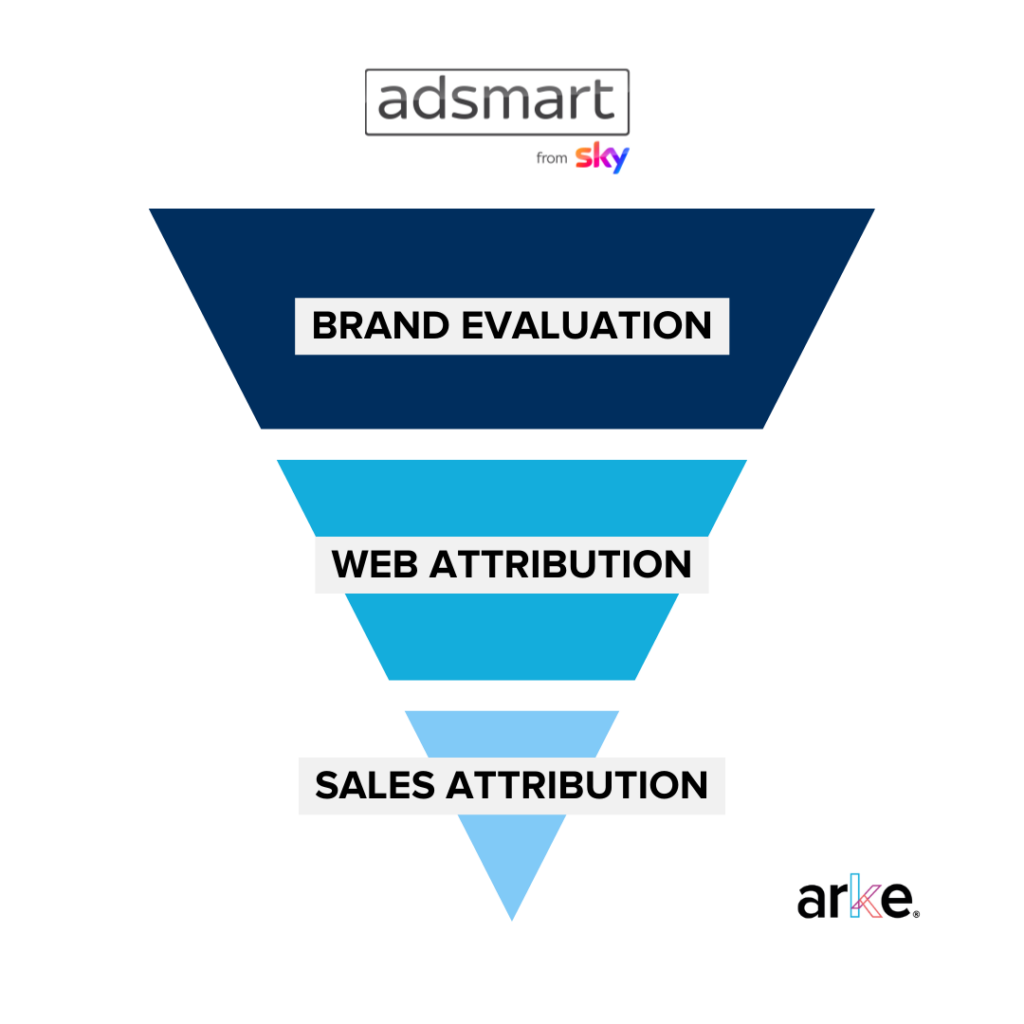
Your performance is measured in detail, through brand to web to sales. Using the world’s largest viewing panel, Sky can provide comprehensive campaign reporting. Through measuring brand cut through to sales on your website, all the way to offline and online sales or enquiry data provided by client or third parties (loyalty card data).
Engaging Audiences with Enhanced Creativity
Sky AdSmart’s targeted approach enables advertisers to create highly relevant and engaging content for their specific audiences. This level of personalisation allows for more creative storytelling, making your ads stand out and resonate with viewers.
With 59% of marketers saying that they will be increasing their budgets for advanced TV, including data-driven linear TV and addressable TV, it’s a channel you definitely want to take advantage of.
At Arke, we can help you create an ad that lingers in your audience’s minds. Not only that, but we have the Clearcast process covered, meaning you can sit back and relax whilst we do the heavy lifting.
Sky AdSmart is a prime example of the convergence of TV and digital advertising. As the media landscape continues to shift, embracing innovative solutions like AdSmart ensures that your brand remains relevant and adaptable in the face of changing consumer behaviours.
Its hyper-targeting capabilities, cost-effectiveness, real-time insights, and creative opportunities make it an essential tool for advertisers looking to maximise the impact of their campaigns. By utilising Sky AdSmart, you’re not only reaching the right audience but also future-proofing your advertising efforts in the dynamic world of television and digital convergence.
Here at Arke, we can elevate your advertising using our expertise in digital TV. Take your advertising to new heights and get in touch with an Arkenaut today.
With an ever-evolving social media ecosystem, the key to successful brand advertising lies in finding platforms that offer unique opportunities to connect with users on a more personal level.
Among these platforms, one stands out for its distinctive approach to communication and its ability to captivate the attention of millions of users worldwide – Snapchat.
Snapchat, initially known for its disappearing photo and video messages, has rapidly transformed into a dynamic multimedia platform, evolving far beyond its humble beginnings. It has redefined how we communicate, share stories, and connect with friends and family.
Yet, thought to be a platform for a very young audience, its true potential as a powerful advertising tool is often overlooked – so we’re here to tell you why it’s worth it.
A captive and diverse audience
With over 500 million monthly active users worldwide, Snapchat boasts an expansive and diverse audience. Its users span across various demographics, including the highly coveted millennial and Gen Z population. In fact, Snapchat users range from 13 to 35 years old and beyond, reaching an impressive 75% of millennials and Gen Z.
So why is this a great audience to reach? Ad recall for Gen Z on Snapchat is higher than any other generational cohort, even though these users spend less time watching each ad. Over half (55%) of Gen Z can recall an ad they watched for less than 2 seconds, helping your brand stay in the forefront of a huge chunk of minds.
AR also can take your brand to new heights. Snapchat users are also 1.5x more likely than non-Snapchatters to gravitate towards immersive video and mobile games, including AR experiences, meaning a custom filter or AR game for your brand could be a perfect fit for the platform and its users.
Snapchat offers a remarkable opportunity for brands to tap into the vibrant energy of these younger generations who are known for their purchasing power and propensity for digital engagement.
Unparalleled targeting abilities
Snapchat’s advanced targeting capabilities allow brands to reach their ideal customers with pinpoint accuracy. Leveraging a wealth of user data, including location, interests, behaviour, and demographics, brands can tailor their campaigns to reach specific segments of the Snapchat user base.
In the UK, Snapchat has 22.2million active users. You can refine these through custom audiences, retargeting audiences and even use your own data to target users such as your Snapchat customer lists or even lookalike audiences based on your existing customers.
And with Snap having its very own ‘Maps’ feature, location targeting has never been more creative. More than 300 million Snapchat users engage monthly with the Snap Map, which highlights nearby stories and business listings, known as ‘spotlighting’. Last year, Snap saw a 55% increase in time spent watching Spotlight content.
Just think, got a large scale promotion coming up? Encourage your audience to upload a snap story when they are at your event and populate your snap map location with a load of free advertising!
With the ability to re-engage with users who have already viewed your website, interacted with your ads, downloaded the app or purchased in the past, Snap is a platform that shouldn’t be dismissed in reaching specific audiences.
Is it cost effective?
Snapchat advertising can be cost-effective for businesses with different budget sizes. The platform offers flexible budgeting options, allowing you to set daily or lifetime campaign budgets.
Snapchat utilises an auction system known as goal-based bidding to determine charges based on 1,000 impressions (eCPM). With this approach, you have the ability to establish a maximum price for each instance when a viewer engages in the specific action your advertisement is optimised for.
As you’re in control of the cost, you can tweak your budget to optimise ROI. Snapchat may be ideal for you if you’re on a tight budget, and we’re pretty good with numbers. Here at Arke, our average CPM for Snap is £1.41, with Snap’s average cost per thousand impressions being £2.32!. Not to show off but we also champion the cash with other channels too, including an average CPM for Facebook of £1.18, £1.57 for Instagram and £1.70 for TikTok!
You can actually launch ads on the platform for as little as £3.94 a day. When you set up your ad, you can see estimates of reach and results based on how much you want to spend. Then adjust as you see fit. Your ads will be shown to people who are most likely to respond to them.
So, how can I utilise my Ad Creative?
Snapchat has the potential to reach over 557m people through paid advertising, so it’s important to optimise your ad creative to stop the audience in their tracks. Recently, we spoke about the rise of VR, and how advertisers may be able to utilise this in their advertising. But what about the widely available augmented reality side of advertising that already exists?
Snapchat Lenses present an impactful and unforgettable method to engage with a vast audience through augmented reality (AR). A simple tap can transport Snapchatters into your brand. Lenses deliver more than just an impression; they provide “play time,” as users spend time interacting with your dynamic ad. Snapchat users are 1.5x more likely to interact with mobile games, including AR experiences.
In fact, 63% of Snapchat’s daily active users are using Augmented Reality (AR) filters. Whether you’re a makeup brand letting customers preview a new makeup look or a gaming brand bringing a snapshot of your app to snapchat, sponsored lenses are a great feature to encourage mass engagement from your audience.
But don’t forget about your other ad formats. Snap also offers single image and video ad formats, perfectly optimised for mobile view. Keeping your ads between 5-6 seconds drive the best performance, according to platform data. Snap also recommends that ads that feature UGC (user-generated content), with Snapchat-inspired features, while speaking to the camera, can be significantly stronger at driving view-through.
In conclusion, Snapchat is not a platform to be dismissed when it comes to your advertising. In an ever-evolving digital landscape, Snapchat has emerged as a powerful platform that enables brands to break through the clutter and connect with their target audience in new and exciting ways.
At Arke, we can really harness the power of Snapchat for your brand. If you are ready to explore the possibilities of snap, get in touch with an Arkenaut today.
Recently, our Paid Media experts have been hosting a whole lot of training sessions for our clients, helping them to understand the ins and outs of paid media and the benefits it can bring.
As an agency, we’ve been harnessing its power to effectively market and produce return for our clients for over five years. We’re so passionate about it that we want to share our expertise with you.
In this blog, you’ll find out what it takes to make a great cross-channel marketing campaign; or one that combines your organic and paid media efforts for maximum return. It’s time to make your brand omnipresent in your consumers’ minds. Let’s go!
What is a cross-channel approach?
Time and time again, brands have wondered which targeting option is best for achieving brand awareness – a cross-channel approach is the answer.
This approach allows your brand to be omnipresent and designed to connect the dots in your customers’ minds and remind them about your brand wherever they are – Twitter, your website or on their commute to work.
Why should you consider a cross-channel approach?
A cross-channel approach is a marketing solution that’s guaranteed to boost your brand awareness while nurturing your audience towards conversion.
Plus, it saves brands money as they can combine their organic and paid media campaigns to speed up the conversion process.
Why is a cross-channel approach so effective?
Bolstering organic media with paid activity allows brands to put budget behind their brand message and re-target those most interested in / engaged with their brand.
In fact, paid advertising alone can increase brand awareness by 80%. Using a combination of paid and organic activity will only increase this figure further. What’s unique about paid media is its flexibility, allowing brands to pull or increase budget while offering on-the-go optimisation capabilities.
What’s more, most people use six social media platforms, so targeting them on each of these platforms is key to increasing brand recall. Whether you’ve got the budget to target them on two platforms or ten, being present where your audience spends their time is key to building up a better awareness of your brand and your offerings.
How can you get started on paid media?
-
- Set SMART targets
Don’t begin your cross-channel campaign without outlining what you want to achieve. Getting SMART with your targets will ensure you’ve got something to refer back to throughout the campaign to keep you on track.
This is particularly important when you’re putting budget behind your campaigns, as you’ll want to be able to measure the results against your objectives and calculate your return on investment.
-
- Know your keywords
Paid media is driven by keywords, as it’s essentially a bidding process whereby the highest bidder for certain keywords gets their advert shown above their competition. However, if you’re clever with your choice of keywords, you can do this on the cheap.
There are some keyword tools that will help you plan out your ad campaigns. We suggest using Google Keyword Planner, Google Search Console and Google trends to begin with.
Another tip is to create long-tail keywords, i.e. those which are made up of multiple words to help reach your audience while beating the competition. For example, ‘unisex hand-printed dungaree company in Brighton’ is a longer tail keyword than just ‘dungarees’.
While fewer people search for the longer tail keywords, those who do are more likely to be looking for your product, making them more likely to make a purchase.
Meanwhile, highly competitive keywords like ‘dungarees’ will produce a variety of results that might not be what your audience is looking for. You’ll also be up against other brands bidding on that keyword, meaning you’ll need more budget to show up high in the search engine results pages.
-
- Start small
Test out Google Search and social media to begin with. Pick a platform you know your audience is active on based on their demographics and their user behaviours. Once you know how they interact with the platform, it’s time to make an ad.
The best part is that most platforms don’t have a minimum spend, so you can test out paid advertising, whatever your budget. Once you’ve launched your first paid media campaign, review it and analyse what worked well and what didn’t. From this, you can tweak your next campaign for better performance; this is called optimisation.
-
- Make your ads stand out
While strategy plays a key role when it comes to increasing your brand awareness, without kick-ass creative, you’ll fail to create campaigns that are seen by, or resonate with, your audience, which can result in disappointing conversion rates (which is not what we want!)
Here are some key design considerations when creating adverts:
-
- Which areas of your advert design will be seen?
-
- Is there an area that will be cut off by the platform?
-
- What design and dimension specifications do you need to adhere to?
-
- How can you make sure your logo is seen on each design?
-
- Which areas of your advert design will be seen?
-
- Are there any interactive elements that you could incorporate into your design to make your ads more native, i.e ads that play into the existing best practices on the platform?
-
- How do people interact with adverts on the platform? How can you increase the user experience of your ads and direct them to your conversion action?
-
- How can you use a combination of ad types to build up a narrative around your brand?
-
- Nail your tone of voice
Once you’ve got your ad in front of your audience and settled on a great design, it’s time to convince them to take the next step. The best way to do that is with clever copywriting.
Luckily for you, we recently launched our messaging framework for brands, guiding them on how to communicate effectively with their audience/s. By downloading your copy, you’ll get free insights from our Paid Media and Copywriting experts on how to engage your audience at each stage of the funnel and on different platforms.
Want to build your brand’s presence with a multi-award-winning team by your side? We’re an experienced team of experts specialising in advertising, creative and digital fields who love producing results for our clients. Get in touch to discuss how we can boost your brand awareness.
Mallorca, Mexico or Montenegro? Wherever you or your audience loves visiting, you can now use people’s vacay preferences to inform your targeting strategy. Introducing Snapchat’s latest feature: Dynamic Travel Ads. Ready for your ads to take off? It’s time to jet-set to success. Here’s everything you need to know:
What are dynamic ads?
Dynamic ads are flexible banners that change their content based on the user they’re being served to. This means you make your ads even more personalised to your audience, increasing the likelihood of conversion.
Who can benefit from dynamic ads?
Travel agencies, retailers, auto dealerships, hotel chains or food delivery companies can all benefit from serving dynamic ads. If that’s you, or you simply want to learn more about the update, keep on reading!
What does it do, exactly?
The new update will help you advertise your business better on Snapchat by allowing you to retarget users who have been to your site before, advertising based on their hotel preferences, destinations and flight routes. You can also:
Reach audiences who haven’t interacted with your brand before. With high-tech machine learning, sit back and let Snapchat serve ads to users based on travel interests and the popularity of listings and destinations
Drive bookings with locally-relevant retargeting. With the update, you can deliver the best, most-relevant travel ads for audiences. For example, you’ll gather a better understanding of where your customers are keen on travelling, then serve ads relating to the best villa, hostel or hotel for their travel style
How does it do this?
There’s visitor data on 49 million places in the Snap Map, enabling Snapchat to collate that data and serve advanced, locally-relevant adverts to holiday makers and keen jet setters.
Dynamic Ads utilise Snap’s pixel tracking to match user behaviours and Snapchat’s internal data and activity tracking. Basically, it improves tracking and, best of all, it does it all for you!
Why should you consider using Dynamic Travel Ads?
- Studies show that Snapchatters are more likely to travel than users of other platforms, making Snapchat the perfect placement to generate high ROI for your brand
- 76% of Snapchatters are planning on travelling to their much loved pre-pandemic holiday spots – offering a lot of retargeting information. With dynamic ads, you can encourage them to use your services over your competitors
- Gen Z and millennial Snapchatters are 37% more likely to book travel after being served a travel ad. With Dynamic Travel Ads, you can make it even easier to convince them that they need a holiday this year. After all, who doesn’t?
Are there any other cool new features?
Yes – Snapchat didn’t stop at Dynamic Travel Ads; they’ve made it even better by introducing a ‘Location Aware’ catalogue that further personalises ads. This feature allows you to add information about latitude and longitude to tailor your message or offer to wherever your audience is in the world. Now that’s relevancy at its best.
Does it work?
Absolutely – when using Dynamic Travel Ads in beta testing, Etihad Airways reduced their cost per flight search by 4 times and saw a 307% increase in ROAS compared to the results of their other ad campaigns. Want to do the same?
What do you need to do?
Remember that Snapchat is a unique platform, and your dynamic ads need to reflect the format and style of Snapchat ads. Always be creative in your approach!
If you’re not already advertising on Snapchat, try it out. Put a little budget into split-testing your campaigns and see the results for yourself!
Talk to us about what you want to achieve – we’ll get you set up and shoot your Snapchat ads into the skies (literally and figuratively).
What makes an ad great? Even better, what makes an ad stand the test of time?
Is it a tagline? The celebrity cameos? The clean design for your eyes or jingle ringing throughout the ears? Maybe, it’s all the above or purely lightning striking in the bottle? Maybe, we’re asking too many questions…
In our new series of blogs, we want to break down why these ads are now considered hero campaigns – ads that make the biggest splash and engage (almost) all audiences.
The marketing world is exciting because we’re always learning something new, even from the already-analysed oldies and goldies.
Today, we’re going to illustrate why these campaigns are still respected for their unique marketing approaches, highlighting how we can use these techniques in the new era of advertising we’re heading into.
Get ready to take notes on the GOATS!
Diamonds
When we think of the phrase “diamonds are forever”, you’ll likely think of Shirley Bassey singing the Connery-classic James Bond theme. However, these three words can be associated with one of the greatest slogans ever written for a marketing campaign.
Since 1948, De Beers has used “A diamond is forever” to entice audiences with the rarity and sentimental value an engagement ring has for consumers.
When we picture love, we like to think it’s eternal – and there’s no better way to set that in stone (literally) than with a product that lasts forever.
So how was De Beers inspired to create such a catchy tagline? Through extensive audience research, of course. And your marketing approach shouldn’t be any different.
Throughout the late 1930s, research found that many consumers believed diamonds were too expensive, something not worth their hard-earned cash. And so, a campaign was set in place to market diamonds as an essential need for those getting married.
According to the New York Times, the campaign planned to “create a situation where almost every person pledging marriage feels compelled to acquire a diamond engagement ring.”
Though you can argue this persuasive tactic is slightly unethical, you can’t deny the success. Between 1938 and 1941, there was a 55% increase in U.S. diamond sales.
The campaign also shaped itself and catered to the economic changes throughout the decades.
In the 80s, the tagline, “2 months’ salary”, became part of the campaign, emphasising the importance of saving, then spending your money on an engagement ring that stands the test of time.

The Key Takeaways
Though we’d never promote manipulating the market, De Beers has shown how marketing can create value for even the tiniest products.
The art of persuasion is a delicate line to walk. Placing value on your product is essential; it highlights why it’s better than the rest. But you also need to make sure you’re not overselling or tricking consumers into thinking it’s absolutely essential.
Value proposition is key. What value are you offering your audience with your product, or what problem do you solve?
The tactics used in this campaign also emphasise how effective audience research can be. The more you understand a consumer’s needs, the more you can cater to them through your marketing.
Got Milk?
On a less sour note (see what I did there?), the other direction in audience engagement is to appreciate the one you already have. Retention is almost more important than acquisition, remember.
In 1993, one particular agency was preparing a pitch for a new client, the California Milk Processor Board, which had tasked them with boosting product sales.
A study before the pitch asked participants to go one week without milk – no Nesquik, no cereal, nothing. The absence of this household essential created an interesting (albeit strange) conversation; can we go without milk?
What followed was an advertising campaign that took the country by pop-cultural storm. “Got Milk?”
From The Simpsons to Wolverine, you couldn’t go a day without seeing the slogan. An estimated 80% of all U.S. consumers came into contact with the campaign.
The moral of the story? Simplicity sells. Sometimes all you need is a question, and the rest is history. Sure, you can argue that a product like milk is easier to sell than a diamond, but the uncomplicated way the ad presented itself was a stroke of genius.
From print to OOH campaigns, “Got Milk” was so simple you could place it anywhere and everywhere.
In one year, milk sales rose 7% in California alone, and the brand is still milking (sorry) the campaign to this day.
Key Takeaways
The “Got Milk?” campaign came out when active-audience participation was in infancy. Imagine the possibilities now with social media and digital technologies! If you need help in this department, we’re experts, so get in touch.
Keeping your campaign simple can attract a massive reach in audience numbers. Native content (especially on sites such as TikTok) can be a great example of how a simple question can lead to creative, viral content.
The campaign also shows how important it is to keep consumers already using your product happy and in the loop. The campaign didn’t engage people who weren’t drinking milk; it reminded milk-lovers that they needed a new bottle in the fridge.
Old Spice
So, we’ve looked at some campaigns from the past, but how have more recent(ish) campaigns used the digital world to create forever-lasting ads?
In 2010, Old Spice released a TV commercial with Isaiah Amir Mustafa. The ad has been seen over 60 million times on Youtube – whether that’s because of the ad’s quality or because Mustafa is a walking God is still up for discussion.
However, Old Spice took the commercial’s engagement and expanded upon it. Capitalising on the pop-cultural awareness of the “Old Spice Guy”, the campaign took on a new life via social media platforms.
Across Facebook, Twitter, and other social media platforms, Mustafa took on the spicey (sorry, again) persona, replying to fans with personal videos, even chatting to Starbucks about keeping toasty.
In total, the personalised videos reached 11 million views, with the brand gaining 29,000 fans on Facebook and 58,000 new followers on Twitter.
The Key Takeaways
Do everything to keep your audience engaged. A campaign can evolve into whatever you want it to be, and with social media bigger than ever, the options for creative marketing have only increased.
Think about how you can use the star of your ads to engage and communicate with your audience directly.
Celebrity marketing has morphed into influencer collaboration. Sites such as Cameo have found success through personalised celebrity videos – how can you, as a marketer, branch out, partner with celebrities and grab attention through the platform?
Research into who your audience engages with on social media – who are they following, buying products from and engaging with?
We have a whole study on whether influencer marketing can be the right move for your brand, which you can read here.
See you in part two!
Thought that was the end? We’ve still got plenty to discuss!
From the copy to an ad’s design – there’s still a mountain of campaigns to explore when it comes to the greats.
You never know; we might see you on a list of greats one day!
In the next blog in the series, we’re delving deeper into copy and how it can create the perfect ad. So, make sure to check in on our social posts for when the latest blog drops!
Until then, would you like to know more about audience research, its importance, and how it can improve a campaign’s conception? Get in touch with our marketing experts now.
According to Seth Godin, “a brand is the set of expectations, memories, stories and relationships that, taken together, account for a consumer’s decision to choose one product or service over another.”
In this blog, we’ll explore what comprises a brand, taking a deep dive into these four essentials:
- The USP
- The Target Audience
- The Brand Story
- The Visual Design
The USP
Your USP is a one sentence statement that you own to differentiate your brand from competitors. It sets you apart and clearly communicates a big idea so simply that any manager, executive, intern, CEO – anyone – can repeat it. It’s the core of everything you do at the moment and everything to come from your business in the future.
Car rental company Avis have done this to a tee.
Their USP is that “we’re not the best, but the second best, so we try harder.” A really powerful message and a great example of turning a negative unique point into a positive one, and communicating it to perfection.

How do you go about defining your USP? There are four steps you can take:
- Finding a need and fulfilling it
A good example of this is the lady who invented Spanx – Sara Blakely. She actually invented the first ever pair for herself, before realising that it was something that a lot of women would want access to.
- Specialise in a category
Elon Musk, inventor extraordinaire, specialises in sustainable electric transportation, and other initiatives that will benefit the planet, rather than manufacturing and making anything that moves.
- A non-existing desire or a brand new solution
Usually seen through an innovation in tech, these things literally don’t exist at the moment, so we don’t know what they are. There’s the famous quote by Henry Ford where he talked about his customers and said “If I had asked people what they wanted, they would have said faster horses.” A great example of innovation and how sometimes you know what a customer needs before they know themselves.
- Experience
An example of an experience first company is Nap York, New York City’s first and only 24/7 automated sleep station offering on-demand sleep pods – a business, product and brand that is curated to deliver a unique experience.
PERCEPTUAL MAPPING
Another method of identifying your USP and how you compare to your competitors is through perceptual mapping.
A perceptual map is a visual technique designed to show how the average target market consumer understands the positioning of the competing products in the marketplace. Typically revolving around quality vs price, you can also go a bit deeper than that, and, for example when comparing car manufacturers, position yourselves on an environmentally friendly vs luxury grid.

In a nutshell, a perceptual map basically refers to the consumers’ understanding of the competing products and their associated attributes, and where yours fits in.
TARGET AUDIENCE
Naturally, your target audience comes next. Your product or service is not designed for everyone – hopefully, through the position you take you’ll have a specific audience in mind.
It’s essential that you understand your customers’ needs and wants. That is, after all, what marketing is all about. Understanding your audience is however a journey…a process of constant review, refinement and readjustment. Knowing your target audience helps you gain clarity, create accurate messaging, and will help to define your values and also help to inform your designs. So it’s pretty important!
Understandably given the global pandemic, consumers’ needs, motivations and behaviours have changed over the last 18 months, so you’re going to want to consider these questions at a very minimum:
- Who is your ideal customer?
- What are your customers’ pain points?
- What pain points do you solve?
- Who needs this product or service?
Another way that you can break down your audience and identify your tribe of users is to use this matrix:

THE BRAND STORY
“The King died then the Queen died is a plot… the King died , then the Queen died of grief is a story”
E.M. Forster
A brand story is an emotional narrative that opens up an opportunity for your customer to resonate with your brand. Without a compelling story you are just another nameless company asking for someone’s time or money.
Humans create narrative to give our lives meaning. We are hard wired to attach thoughts and feelings to otherwise arbitrary events. But how can you define your brand story?
- Through a concept
- Through a personal narrative
- Through a manifesto
DESIGN
With the USP defined, the target audience identified and the brand story discovered, we now need to think about how we communicate this visually. Design helps us to communicate intangible ideas in tangible ways. Even something as small as your font can change perception.
Sarah Hyndman, a leading graphic designer, conducted a study on font influence on human perception. People involved in the study were offered the same jelly bean and simply had to eat it whilst looking at one of two fonts. One soft, one jagged.
The results?
- The jagged font saw a 17% increase in reported bitterness of the jelly bean
- The soft font saw an 11% increase in the sweetness of the jelly bean
It’s amazing that something as small and “insignificant” as your font can have a massive influence on how you’re perceived.
Your brand is the most powerful marketing tool you have in your arsenal, with each of the four essentials just as important as the other.
If you’re interested in exploring your brand, undergoing a brand evolution or need help identifying your brand values, get in touch with our creative experts now.
It’s always a good place to start with the very rules and fundamentals of something, and that’s where we’ll begin this blog post, with the definition of “brand”. There are numerous definitions that exist, but we’ve tried to boil it down to 5 key points. A brand is…
- More than a colour palette and logo, a brand is a perceived experience
- How all of the parts of a company work together to create an image
- An idea, a gut feeling and a story that lives in your customer’s mind
- An emotional experience that your customer has when they interact with you on any level
- A promise your customer believes in
Our creative manager likes to think that, to quote Ronan Keating, a brand is what your company says when you say nothing at all!
The Experts
Wally Olins, known as the father of territory branding, once said: “If branding can, in its strange, illogical, emotional way, encourage people to develop a close rapport with soft drinks, hamburgers and running shoes, what will it be able to do when its power is released for genuinely significant and worthwhile activities?” Take a look at our blog about brands taking a stand here.
A renowned branding specialist, Marty Neumeier, the author of one of the most famous brand books out there: The Brand Gap: How to Bridge the Distance between Business Strategy and Design, famously said that:
“A brand is not a logo. A brand is not an identity. A brand is not a product. A brand is a person’s gut feeling about a product, service or organisation.”
Science
As Neumeier described, a brand is much more than a logo or colour palette…a brand should be seen as the intersection between art and science.
There is always science, method and purpose behind the design of a logo and colour choice…they aren’t just random decisions. A brand is more than just a visual exploration, it’s a carefully curated identity, and we have to look at science and research to understand how our brand should interact with the wider world.
Wine tasting
You’re probably reading this and wondering how wine tasting connects to branding. Well it’s all to do with perception…
Neuroscientist Liane Schmidt conducted a study on the link between the price of wine and it’s taste. Schmidt recruited more than 50 students, who were given various wines in an MRI machine and asked to grade them on a 9 point scale
Before consuming, volunteers were shown the bottle and the associated price before consuming, with the twist being that all of the wine was exactly the same.
The results?
As would be expected, the more expensive the bottle of wine, the better the score. But this wasn’t just opinion, the more expensive the wine, the more activity was recorded in medial prefrontal cortex and the ventral striatum, proving that our brains actively change perception (taste) when confronted with a stimulus (price). Remember our first point about a brand being a perceived experience?
The Importance of a Brand
So we’ve understood what a brand is, but just how important is it? Take a look at some of these statistics…
- 86% of consumers say that authenticity is a key factor when deciding what brands they like and support
- 81% of consumers said that they need to be able to trust the brand in order to buy from them
- Using a signature colour can increase brand recognition by 80%
- It takes 0.05 seconds for people to form an opinion about your website
- Consistent presentation of a brand has seen to increase revenue by 33%
- 66% of consumers think transparency is the most attractive quality
- 64% of consumers state they would buy from a brand or boycott it solely because of its position on a social or political issue
- 73% of consumers cite customer experience as an important factor in their purchasing decisions
- 77% of consumers buy from brands who share the same values as them
- 79% of people say that user generated content highly impacts their purchasing decisions
Everything is Branded
Last but not least, everything is branded. Everything that you touch, everything that you see, everything that you hear is branded.
Even when you don’t actively contribute towards your brand you are still developing a brand…that pixelated logo on your website and 30-second loading time all contribute psychologically to your audience’s perception of your company. Even by saying nothing, you are saying everything.
Gey in Touch
If you’re interested in speaking to our experienced team to discover how we can help your brand tell your story, align your vision, unearth your values and put what you stand for at the front of everything you say and do, then get in touch today.