
Sam Hadley
SEO Specialist,
Arke Agency

Making sense of Google’s timings
NEWS
Sam Hadley
SEO Specialist,
Arke Agency
“SEO takes time” is a familiar answer to a reasonable question. It can also become a rather comfortable place to hide. If you’re investing in your website, you’re entitled to ask what, exactly, is taking the time.
Google has given us some useful context.
At October’s Search Central Live Deep Dive in Barcelona, Google’s Gary Illyes presented internal timing data for crawling, indexing, and serving search results. John Campbell’s account for ROAST reports these typical timings: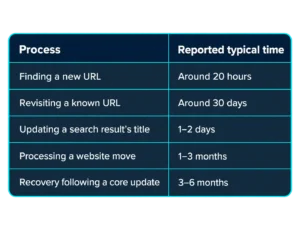 These figures need context: the slower cases extend considerably further, and some pages may never be indexed. Core update recovery carries no guarantee. The stages also depend on each other: Google needs to revisit a page before processing its updated title.
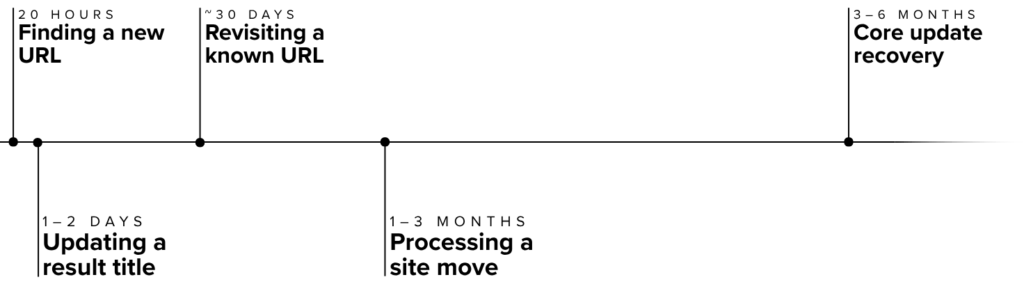
Treat these as reference points. They help explain what Google is doing – the effect on traffic, enquiries, and sales still needs to be measured.
For me, the useful implication is that we can ask more precise questions about progress.
Search Console’s URL Inspection tool shows the last crawl date and information about the indexed version. A crawl that predates your update gives you a different starting point from a page Google has already revisited.
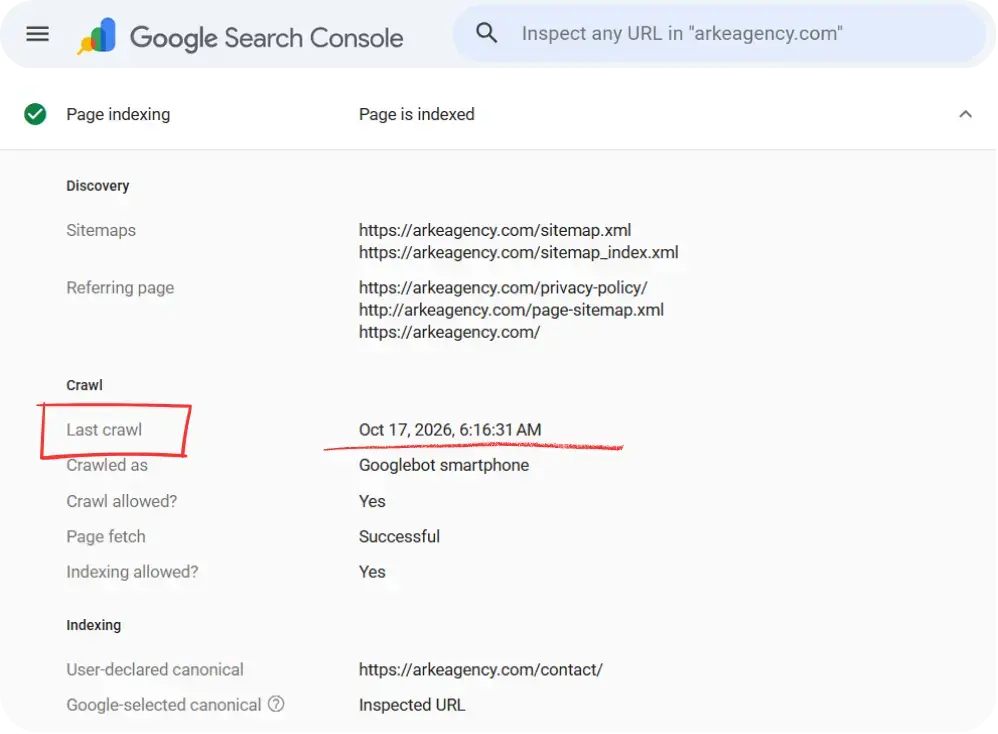
A blocked page, an indexing issue or conflicting signals about which URL Google should use warrants investigation. That diagnostic work can be carried out by an SEO specialist, alongside making improvements and reviewing their effect.
As I explored in my article on keywords and measurement, rankings provide useful evidence within a wider picture of visibility and commercial value. An updated title or a fresh crawl is a sign of processing; judging success means following through to the outcomes that matter.
That sits alongside the wider priorities for organic search in 2026: understanding your audience, maintaining solid technical foundations and producing useful content.
Your SEO team should be able to explain what changed, what the evidence shows and when progress will be reviewed. Patience becomes much easier to justify when there is something concrete behind it.
In practice, I would expect a progress update to connect actions with evidence: which pages were changed, when they were changed, what has happened since, and what still needs attention. A review date gives that work some structure, provided there is a reason for choosing it. The comparison also needs context; demand, seasonality and other activity can affect the numbers. If evidence suggests a problem with implementation or indexing, that deserves attention as soon as it is identified. Where the evidence supports allowing more time, explain what will be monitored and what would prompt a different decision.
If you’re unsure whether your website needs more time or a closer look, get in touch with Arke or find me on LinkedIn. Let’s chat about what you’re seeing and where to focus next.
Thanks to Jake Ward for the post that prompted this piece, and Barry Schwartz for his reporting.
Got a mission for us? The Arkenauts are all ears! Book a call, drop your brief or enquiry into our digital portal, and we’ll be in touch straight away!