

Sam Hadley.
SEO Specialist
TL;DR
- Don’t chase acronyms in 2026; treat them as signals of how search is expanding, not replacements for SEO.
- Search is becoming answer-led and platform-led, so organic success starts before Google in the feeds, forums, and communities where opinions form.
- Spend more time than you think understanding your audience, because keyword research alone won’t tell you how they decide or where they hang out.
- Keep the fundamentals tight: strong technical foundations, clear structure, and content aligned to high intent rather than AI-generated filler.
- Build a consistent, trusted brand across the web for humans and machines, because AI systems reward clear, coherent signals and reputation patterns.
In this article, Sam, SEO Specialist at Arke, shares how we’re thinking about organic search – and where focus should sit in 2026.
It’s no secret that search marketing is in a moment of extreme flux. That’s not to say that search hasn’t always been changing, adapting to new technologies and user behaviour, but in the last year we’ve been introduced to new acronyms, ambiguous platform updates, and changes to the way people search. And this is because of AI.
There’s a lot of noise around what the future of search looks like, and it’s important for us as forward-thinking marketers to try to imagine those possibilities. Will agentic AI take over the role of search altogether, will discovery continue to fragment across platforms like TikTok and Reddit, or will we end up with a hybrid model where traditional search, AI interfaces, and social platforms coexist?
Interesting thought experiments, yes – but not grounded in the here and now, and not particularly useful for businesses trying to make sales or to us as an agency focused on delivering value to clients. It’s important to distinguish hype from reality to know where to invest your SEO budget in 2026.
What’s with all these acronyms? (AEO, AIO, GEO, SXO)
Some search marketers have created new acronyms to provide a framework for successful organic search strategies in the future. This isn’t about the lazy “SEO is dead” tropes I’ve seen some of the less sentimental voices on LinkedIn decrying. The intention is to broaden the scope of organic search marketing beyond Search Engine Optimisation – or at least beyond the narrower interpretation of SEO shaped by years of relative stasis in how the discipline was practised.
So what do these new terms mean, and what do they aim to achieve?
| Acronym | Meaning | What it does |
| AEO | Answer Engine Optimisation | Optimising for zero-click answers, such as AI Overviews |
| AIO | Artificial Intelligence Optimisation | Ensuring your brand is represented accurately in AI training sources |
| GEO | Generative Engine Optimisation | Optimising content to be cited or summarised by AI chats |
| SXO | Search Experience Optimisation | Prioritises user engagement a responsive and unified experience |
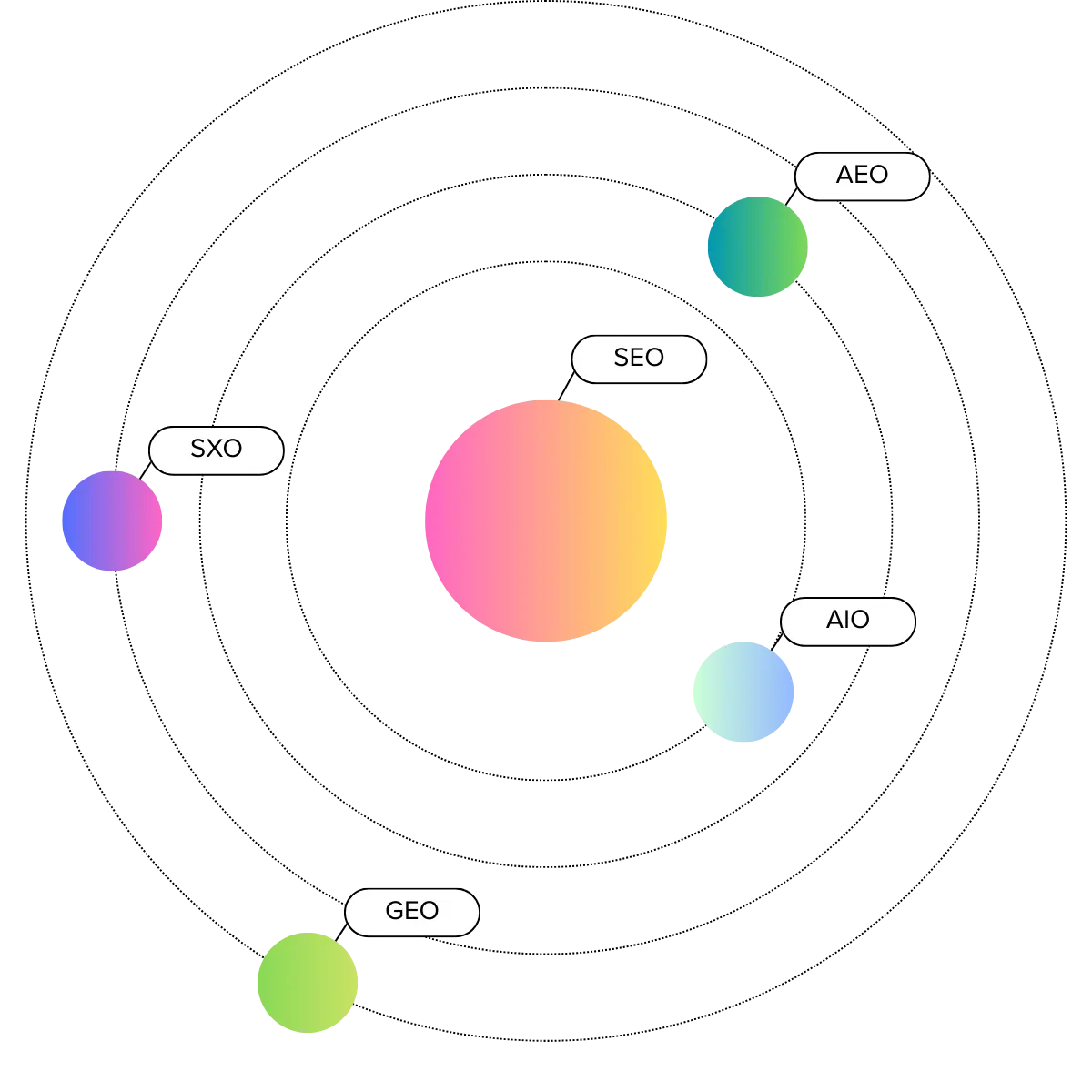
SEO remains the gravitational centre of organic search. New acronyms like AEO, GEO, SXO, and AIO orbit it, highlighting how optimisation plays out across different surfaces and systems rather than replacing the core discipline.
How search has changed
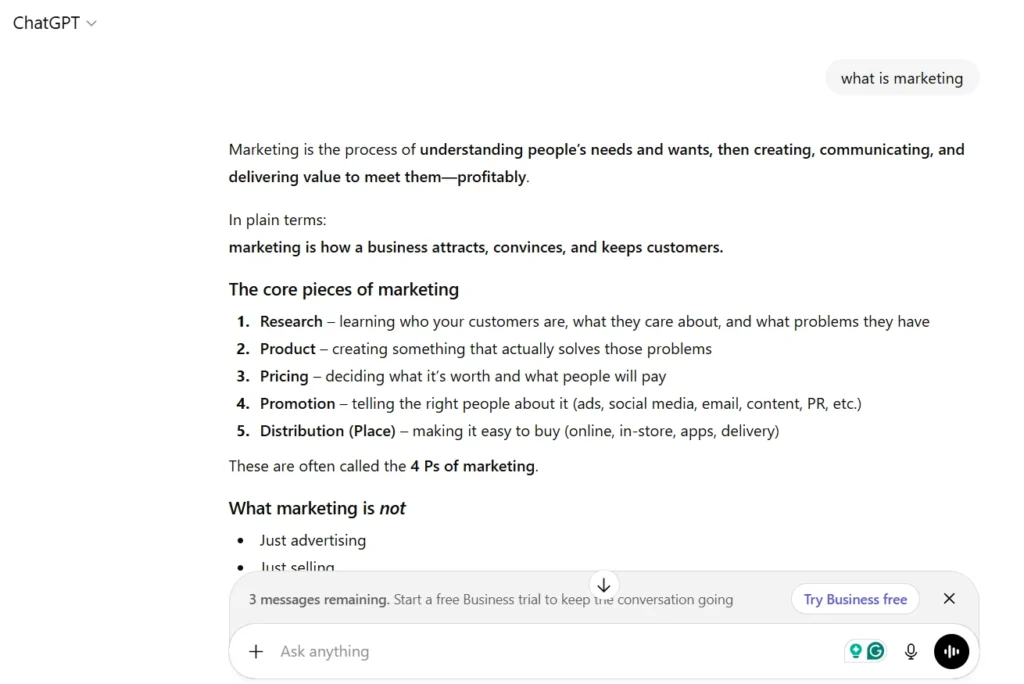
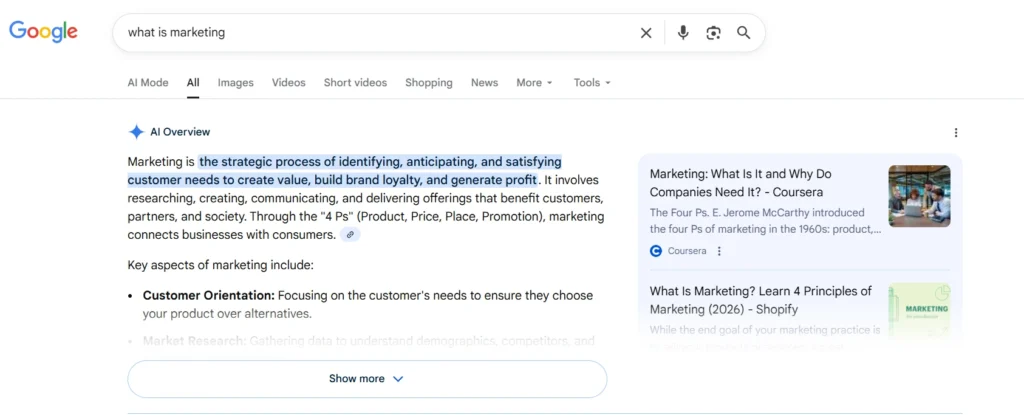
- SERP/UI shifts: AI Overviews, AI Mode experimentation, and more answer-first layouts.
- Rise of LLM-based search tools: Perplexity, ChatGPT Search, and similar interfaces.
- User behaviour: growing zero-click behaviour, platform-first discovery, and TikTok increasingly used as a search engine.
- AI capabilities: improved summarisation, early memory and personalisation, and emerging agentic behaviour.
- Social search: a rapidly growing behaviour reshaping discovery, with algorithms prioritising engagement, perceived authority, watch time, and community interaction over keywords.
The mechanics of how search results are presented have changed, but the underlying logic hasn’t. Entities, relevance, and structure still depend on clean, well-understood inputs… they’re just being interpreted across more surfaces than before.
What has stayed the same
Intent still matters: understanding what users are actually trying to achieve, whether the result is a link, a summary, or an AI-generated answer.
Clean site structures enable easy browsing: logical architecture helps both humans and machines.
Internal linking provides context: reinforce topical relationships and help guide both users and systems toward your most important pages.
Trust, authority, and reputation: these influence traditional rankings and increasingly shape how AI models assess credibility, relevance, and whether a brand is worth citing at all.
Quality over quantity: unique and information-dense content continues to outperform fluff.
The fundamentals of good SEO are still the fundamentals, however search looks.
What should I focus on in 2026?
Take more time than you think to research your audience
If there is one area that deserves more attention than most marketers instinctively give it, it’s developing a deeper understanding of your audience. In 2026, that understanding will matter more than any individual tactic or channel. Keyword research remains useful, but on its own it only tells you what people search for, not who they are, how they think, or how they arrive at decisions long before a query is typed.
In practice, the gap between marketers and their audiences is often smaller than assumed. When you genuinely care about the product or service you are marketing, many of the same interests, frustrations, and behaviours are shared. The places you spend time online are frequently the same places where your audience forms opinions, asks questions, and validates choices. Treating that overlap as a strength makes audience research more intuitive and more effective.
The work itself should start with listening rather than optimisation. GA4 demographic data can provide a baseline, but it quickly reaches its limits. More valuable insight comes from observing how people talk about your brand or your industry in forums, on social platforms, in reviews, and within industry communities. Surveys can add structure to those insights, while ongoing sentiment tracking helps reveal how perception changes over time. This is also where Rand Fishkin’s critique of measurement is useful: he argues that dashboards often over-credit the final touchpoint, so the honest approach is to look at patterns over time and test what actually moves demand.
SEO starts before your website, so influence each touchpoint
With that understanding in place, influence can begin well before a search happens. Discovery increasingly takes place across social platforms and community-driven spaces, where repeated exposure and credibility shape opinion over time. This aligns closely with Fishkin’s broader point that platform-first marketing has changed what success looks like, shifting the goal from pure website traffic to influence where audiences already spend their attention.
It’s also where Mike King’s “it’s just SEO” critique becomes practical. If you treat organic as something that begins and ends on Google rankings, you’re optimising for a shrinking slice of the journey. King’s argument is that even when tactics overlap, the value exchange and the surfaces are changing, and your strategy needs to expand accordingly.
Your UX needs to be good and technical foundations solid
When people do reach the point of searching for you directly, that demand needs to be supported by a site that has solid technical foundations and a UX that doesn’t turn people away. Clean architecture, strong internal linking, structured data, and clear entity signals ensure that both users and machines can understand who you are and what you offer.
Content should be aligned with intent and agree with other sources
At the same time, on-site content should reflect higher intent than in the past. By the time people land on your site, they’re less likely to be casually researching and more likely to be converting.
That doesn’t mean there’s no place for brand or cultural content. Your “about us” pages, your story, and how you talk about who you are still matter, particularly when they reinforce what people are already hearing about your brand elsewhere. The difference is that this content now plays a supporting role, helping validate and align perception rather than doing all the heavy lifting on its own.
This is also why “AI slop” is such a bad trade. Lily Ray has been direct about the rise of low-quality, spammy content and the long-term risk of chasing short-term visibility, especially as systems get better at rewarding trust and quality over time.
We have a new audience: AI
Finally, the audience now includes machines as well as people, so treat AI as a new persona. AI systems read, summarise, and learn from the information available about you, looking for consistent patterns across the web. Structured data, well-organised content, and a coherent off-page presence make it easier for those systems to interpret your brand accurately, in much the same way they help human audiences build trust.
2026 Organic Search checklist
Download the 2026 Search Checklist for free below.
Technical SEO
- Clean, crawlable architecture
- Strong internal linking
- Rich structured data
- Entity clarity across web presence
- Performance, accessibility, UX
Content and on-page
- High-value, information-dense, scannable content
- A unique brand voice clarity about user intent
- Avoid low-quality AI slop
Off-Page and entity building
- Brand mentions as non-link authority signals
- Strong reputation across web platforms
- Reviews, citations, listicles
- Presence in discussions (Reddit, LinkedIn, industry media, directories)
- Cross-Surface Presence
- Think beyond Google: be discoverable where users search (TikTok, YouTube, Reddit, AI chat interfaces)
Why should you work with a SEO digital marketing agency?
At Arke we don’t have copy/paste strategies, each of our clients has unique needs and each industry has its own complexities and requirements.
From our Brighton HQ, our teams work closely together so there’s no cannibalisation between paid campaigns, SEO, creative flair and UX.
Contact us below for a no-compromise chat about the current state of your marketing needs and let’s build something great together.